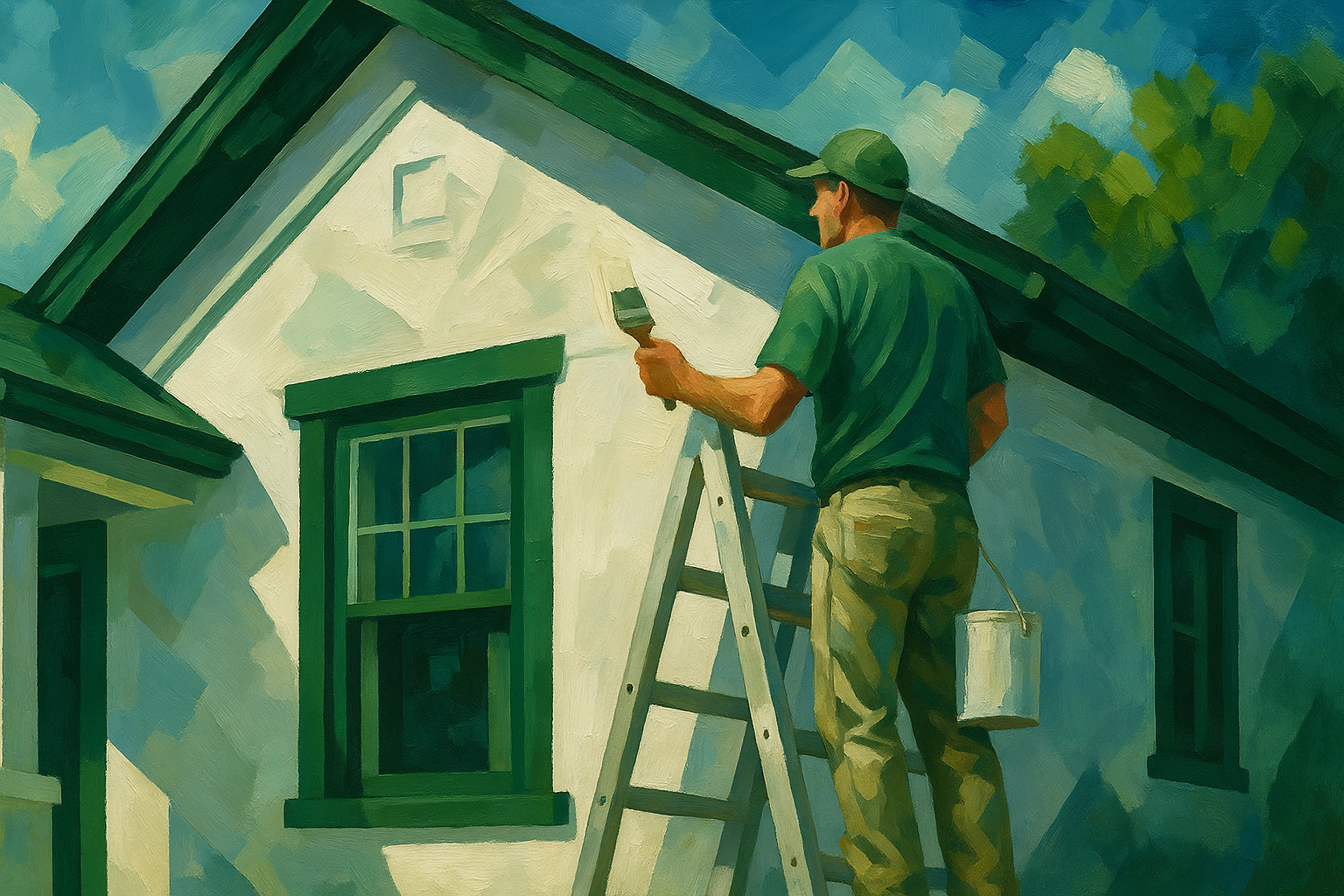
Repainting is not just about a fresh look.
It is your home’s raincoat and makeup in one.
Good paint:
- Protects against rain, sun and temperature swings
- Seals out moisture that can cause rot and mould
- Makes your home look well loved and well maintained
Ignore repainting for too long and you pay for it later in repairs. Time it right and you stretch every dollar you put into your walls.
How Often Should You Paint the Exterior?
How often you repaint depends on what is under the paint. Here is a quick cheat sheet.
Exterior repaint timeline by material
| Exterior surface | Typical repaint schedule | Why it needs that timing |
| Wood siding / trim | Every 3 to 5 years | Expands, contracts and drinks in moisture. Paint breaks down faster. |
| Fibre cement | Every 10 to 15 years | Very stable and holds paint well if prepped properly. |
| Aluminium siding | Every 5 to 10 years | Can chalk and fade. Needs repaint when colour dulls. |
| Stucco | Every 5 to 6 years | Hairline cracks and sun exposure age the finish. |
| Brick (painted) | Every 12 to 15 years | Solid, but once painted it must be maintained. Paint eventually peels and chalks. |
Key takeaway:
If you cannot remember the last time you painted your exterior, you are probably due.
Quick exterior rules of thumb
- If wood is exposed or grey, repaint now, not “later”
- If colour looks significantly lighter on the sunny side, you are at the end of the paint’s life
- Newly built homes often need repainting sooner (builders sometimes use lower cost paint)
How Often Should You Paint Inside?
Interiors do not deal with rain, but they do deal with kids, pets, steam and furniture bumping into walls. Different rooms have different lifespans.
Interior repaint timeline by room
| Area of the home | Typical repaint schedule | Why it needs repainting |
| Living / dining rooms | Every 5 to 7 years | Less wear and tear, but colours date and scuffs build up. |
| Kitchens | Every 3 to 4 years | Grease, steam and frequent cleaning wear down the finish. |
| Bathrooms | Every 3 to 4 years | High humidity stresses paint, especially near showers. |
| Adult bedrooms | Every 8 to 10 years | Lower traffic if you keep hands and furniture off the walls. |
| Kids’ rooms | Every 2 to 3 years | Stickers, markers, kicking, toys – enough said. |
| Hallways / mudrooms | Every 2 to 3 years | High traffic, bags and boots constantly brushing walls. |
| Interior trim and doors | Every 2 to 4 years | Chips and scuffs show quickly in semi gloss finishes. |
| Ceilings | Every 10 to 15 years | Unless you smoke or have leaks, ceilings age slowly. |
Fun fact:
Higher sheen paints last longer on busy walls because they handle cleaning better. That is why hallways often do better with an eggshell or satin, not a flat finish.
7 Signs It Is Time to Repaint
You do not need a calendar if you know what to look for. These seven signs are clear “paint me” signals.
1. Faded or washed out colour
If your once rich blue now looks like dusty denim, UV light has done its work.
Outside, this is most obvious on the south and west facing walls. Inside, you will see it behind artwork or furniture when you move things.
When colour is noticeably lighter or uneven, the paint film is weakening. That is your early warning.
2. Chalking
Run your hand along the siding. Do you get a fine, powdery residue on your fingers? That is called chalking.
Chalking means the paint is breaking down and will not protect the surface much longer. If left alone, it often leads to peeling.
3. Peeling or flaking
This is the big, obvious one.
You will see:
- Flakes of paint on the ground
- Edges of paint curling away from the surface
- Bare, exposed wood, metal or stucco underneath
Once peeling starts, water gets behind the remaining paint and makes things worse. You cannot “spot fix” severe peeling long term. The area needs:
- Scraping and sanding
- Priming bare spots
- Repainting with a quality exterior paint
4. Cracking or “alligator” patterns
Look closely at older paint and you might see a pattern of small cracks that looks like alligator skin.
This is usually caused by:
- Thick layers of old paint building on top of each other
- Poor quality paint used in the past
- Painting over a surface that was not fully dry
Cracked paint lets moisture in. Repainting over it without proper prep only hides the problem for a short time.
5. Rotting or soft trim
Check exterior trim boards around:
- Windows
- Doors
- Garage doors
- Deck railings
Press gently with your thumb or a screwdriver. If the wood feels soft, spongy or crumbles, moisture has been getting in behind failed paint or caulking.
Steps to take:
- Find the cause – missing caulking, failed flashing or open joints
- Replace rotten sections – do not just paint over soft wood
- Prime and repaint with a quality exterior primer and paint
Key takeaway:
Paint is not a bandage for rotten wood. Fix the damage, then repaint to prevent it happening again.
6. Mould and mildew
Dark spotting or fuzzy patches on paint can be:
- Mould
- Mildew
- Algae (common on shaded exteriors)
Typical mould spots:
- Exterior north facing walls that stay damp
- Bathroom ceilings and corners
- Around window frames where condensation collects
You should:
- Clean the area with a cleaner rated for mould and mildew
- Rinse and let it dry completely
- Repaint with a paint that has good mildewcide properties
- Fix the moisture source – ventilation, leaks, grading outside
If mould keeps coming back, repainting alone will not solve it. You need to deal with the moisture.
7. Stains and stubborn scuffs
Inside, you might not see peeling, but you see:
- Stains from water leaks
- Grease splatters that will not wash off
- Deep scuffs and dents in high traffic areas
If cleaning leaves shiny spots, dulled patches or ghost stains, it is time. A fresh coat evens out the finish and makes the walls easier to clean next time.
What Affects How Long Paint Lasts?
Not all paint jobs are created equal. Here is what really changes how long your paint will serve you.
1. Climate and exposure
- Sun: Strong sun fades colour and breaks down paint faster. Dark colours wear out faster than light ones.
- Rain and snow: Frequent wetting and drying stresses exterior paint.
- Temperature swings: Repeated freezing and thawing moves the substrate and can crack paint.
- Coastal areas: Salt in the air can be hard on paint and metal surfaces.
If you live in a harsh climate, stay near the shorter end of the repaint timelines.
2. Quality of materials
Higher quality paint is more expensive upfront, but it usually:
- Covers better in fewer coats
- Holds colour longer
- Resists cracking and peeling
- Cleans more easily
Primer matters too. A bare surface with no primer is almost always a short term fix.
3. Surface preparation
Prep is the least glamorous part of painting, but it does most of the heavy lifting. Good prep usually includes:
- Washing the surface
- Scraping and sanding loose paint
- Repairing small cracks and holes
- Priming bare areas
- Caulking gaps and joints
Cut corners here and you will be repainting sooner.
4. Colour and sheen choices
- Darker colours: Look dramatic, but fade faster in strong sun.
- Very bright colours: Can show wear and uneven fading more quickly.
- High sheen finishes: Show surface flaws but are easier to clean.
- Flat finishes: Hide imperfections but are less washable in busy spaces.
Choose colours and finishes that match how the room or exterior area is actually used, not just how it looks on a paint chip.
5. Ongoing maintenance
Small chores extend the life of your paint significantly:
- Cleaning exterior walls lightly every year or two
- Touching up chips before they grow
- Recaulking gaps that appear over time
How To Make Your Paint Job Last Longer
You are investing money and time in this paint job. Here is how to stretch it.
1. Choose high quality paint and primer
For most homes:
- Exterior:
- Use a 100 percent acrylic exterior paint from a trusted brand
- Use a stain blocking primer on bare wood or stained areas
- Interior:
- Use washable, low VOC paint for main living areas
- Use moisture and mould resistant paint in bathrooms and kitchens
Spending a bit more per litre can easily add a few extra years to the life of the job.
2. Caulk joints and gaps
Before painting, run caulk along:
- Window and door trim edges
- Gaps where siding meets trim
- Joints where two pieces of trim meet
Use a high quality, paintable exterior or interior caulk depending on location. Smooth it out, let it cure, then paint. This keeps water and drafts out and helps prevent peeling edges.
3. Clean your exterior regularly
Once a year or every second year:
- Mix a mild cleaning solution or use a siding cleaner
- Gently wash siding with a soft brush or low pressure sprayer
- Rinse from top to bottom
Avoid high pressure washing directly at the paint. That can force water behind siding and shorten the paint’s life.
Pro tip:
Clean first, evaluate second. Sometimes what looks like fading is simply a layer of grime. Washing lets you see the real condition of the paint.
4. Keep interiors dry and ventilated
Humidity inside is a quiet paint killer. To protect bathroom and kitchen paint:
- Use exhaust fans during and after showers and cooking
- Wipe condensation from windows and sills
- Fix leaks quickly
- Keep furniture slightly away from exterior walls to allow air flow
Dry walls live longer.
5. Spot repair before it spreads
Do not wait for a full scale failure. When you notice a chip or hairline crack:
- Lightly sand the damaged area
- Spot prime if bare substrate is exposed
- Touch up with matching paint
Small, regular fixes put off major repainting and keep your home looking fresh year round.
6. Track your last paint date
Write the paint colour, brand, sheen and date in:
- A note on your phone, and
- A small label on the back of a closet door or electrical panel
This helps you:
- Match paint accurately for touch ups
- Know when you are approaching the end of a typical paint lifespan
Bringing It All Together
You do not need to repaint every year. You do need to repaint before damage sets in.
Use this simple checklist:
- Exterior:
- Wood: every 3 to 5 years
- Fibre cement: every 10 to 15 years
- Aluminium: every 5 to 10 years
- Stucco: every 5 to 6 years
- Painted brick: every 12 to 15 years
- Interior:
- High traffic spaces and kids’ rooms: every 2 to 4 years
- Main living spaces: every 5 to 7 years
- Adult bedrooms and ceilings: up to 10 to 15 years
Then cross check the timelines with the 7 signs: fading, chalking, peeling, cracking, rotting trim, mould, and stubborn staining.
If your home is quietly showing two or more of those signs, it is telling you something. It is time to repaint.