Does Your Vancouver Popcorn Ceiling Have Asbestos? What to Do Before You Touch It
If your popcorn ceiling might contain asbestos, do not scrape, sand, drill, or “test” it by poking at it. Asbestos is only dangerous when fibres get into the air, and texture ceilings are easy to disturb. The safest move is simple: pause the project, arrange an asbestos test, then choose the right next step (leave it, encapsulate it, cover it, or remove it professionally).
- How to spot the situations where asbestos testing is a must before renovation
- How popcorn ceiling asbestos testing works in Vancouver and the Lower Mainland
- What to do if results are positive (and what not to do)
- Options and tradeoffs: leave vs cover vs removal
- How pros prevent dust spread, protect your home, and handle disposal
Important: This guide is educational. For confirmed asbestos, follow qualified professional guidance and applicable BC requirements.
Quick answer: what to do before you touch a popcorn ceiling
Step 1: Assume “maybe asbestos” until proven otherwise
You cannot reliably identify asbestos by looking at a ceiling. Texture, colour, and “hardness” are not proof. The safe default is to treat the ceiling as suspect until a lab report says it is asbestos-free.
Step 2: Get it tested (bulk sample, lab analysis)
In practice, a qualified inspector collects small samples from the ceiling texture (and sometimes from joint compound or patch repairs), then sends them to a lab for analysis. You get a report that states whether asbestos is present and, if it is, the type and amount.
| Situation | Safest next step | What to avoid |
|---|---|---|
| You are planning removal, sanding, skim coating, or pot light installation | Test first. Any disturbance can release fibres if asbestos is present. | Scraping “a small area” to see what happens, drilling without testing |
| The ceiling is intact and you are not renovating | Leave it alone. Intact material is usually low risk because fibres are not airborne. | Dry cleaning, aggressive brushing, sanding stains |
| You want a smooth ceiling finish but need to control risk and budget | Choose between encapsulation, covering, or professional removal based on condition and future plans. | DIY removal if asbestos is confirmed |
 Vancouver and Lower Mainland
Want a smooth ceiling without the risk?
Book a ceiling assessment and plan. We will help you map the safest path from “popcorn” to “level 5 smooth” with protection, cleanup, and clear next steps.
Why popcorn ceiling asbestos matters
Asbestos is a naturally occurring mineral that was widely used in construction for decades because it is heat-resistant and durable. The problem is the fibres. When asbestos-containing material is disturbed, tiny fibres can become airborne, get inhaled, and lodge deep in the lungs. Long-term exposure is linked to serious diseases including asbestosis, lung cancer, and mesothelioma.
Here is the key nuance homeowners miss: asbestos is not a “smell” or a “stain.” As Health Canada explains, asbestos poses health risks when fibres are present in the air people breathe. That is why intact materials can be low risk, while sanding and scraping can be high risk.
Why textured ceilings are a common trigger
- They are easy to disturb. Even small changes like adding recessed lights, removing a ceiling fan, or fixing a crack can cut through the texture.
- They create dust fast. Scraping, sanding, and dry cleanup can spread fine debris through the room and into adjacent spaces.
- Renovations multiply exposure. A single ceiling project can involve patching, sanding drywall compound, and repainting, which creates repeated opportunities to release fibres.
But asbestos was banned, so why do we still care?
Canada prohibited the import, sale, and use of asbestos and asbestos-containing products in 2018. That helps going forward, but it does not remove legacy materials already installed in homes and buildings. Vancouver has plenty of older housing stock and retrofits, which is why asbestos remains a real renovation planning issue.
Do you need an asbestos test for a Vancouver popcorn ceiling?
Testing is worth it anytime you plan to disturb ceiling texture. Even if you are “just doing one room,” the consequences of guessing wrong are big. If you are hiring any contractor, testing also prevents last-minute stoppages when a worker recognizes a suspect material and cannot proceed safely.
High-confidence “test first” situations
- Popcorn ceiling removal, scraping, sanding, or skim coating
- Installing pot lights, speakers, ventilation, or new electrical boxes
- Removing a ceiling fan, chandelier, or smoke detector where anchors will be drilled
- Repairing water damage or peeling texture (friable areas release fibres more easily)
- Any project where you will use a sander, grinder, or saw near the ceiling
Lower-risk situations (still be careful)
- You are leaving the ceiling intact and only repainting, with no sanding or repairs
- You are cleaning lightly with minimal contact and no abrasion
If you plan to repaint an older textured ceiling, avoid sanding. If stains or repairs require sanding, revert to “test first.”
How asbestos testing works in BC (and what a good report includes)
Asbestos identification is done through analysis of a physical sample by a laboratory. In British Columbia, WorkSafeBC’s framework emphasizes using qualified people for asbestos surveys and, for abatement work, certification and licensing requirements are in effect. Even if you are a homeowner, these requirements matter because your hired trades must follow them on your jobsite.
What “qualified” means in plain English
WorkSafeBC defines a qualified person as someone with knowledge and training in asbestos hazard management and experience managing and controlling asbestos hazards. In real-world terms, you want an inspector who knows where asbestos tends to hide, how to sample without contaminating your home, and how to write a report that contractors can actually use.
What gets sampled in a popcorn ceiling project
In Vancouver homes, we often see more than one ceiling material in the same room. A proper inspection may include:
- Ceiling texture (the “popcorn” itself)
- Joint compound on seams and repairs (sometimes used in patches or previous smoothing attempts)
- Ceiling paint layers if the texture has been painted multiple times
What you should see in the lab results
A useful report answers the questions your trades will ask before they start work:
- Is asbestos present (yes or no)?
- What type of asbestos was identified (if present)?
- What percentage of the sample contains asbestos (if applicable)?
- Which specific materials and locations were sampled (clear mapping)?
- Recommended risk classification and safe work approach for the planned scope
If you are coordinating multiple trades, keep the report accessible. Strata and property managers often request documentation before approving ceiling work in multi-family buildings.
How long does testing take?
Turnaround depends on the lab and whether you pay for rush service. Many homeowners plan for a few business days, with faster options available when timelines are tight. The important part is to schedule testing early so it does not stall your renovation.
If the test is positive: your options (and how to choose)
First: take a breath. A positive result does not automatically mean your home is dangerous today. It means you should avoid disturbing the material and choose a controlled solution that matches your goals.
Option 1: Leave it alone (lowest disruption)
If the ceiling is intact and you do not need to cut into it, leaving it in place can be reasonable. Health Canada notes that risk rises when fibres become airborne, so an undisturbed ceiling can be lower risk than a poorly planned renovation.
- Best for: stable ceilings in rooms you are not renovating
- Not great for: peeling texture, water damage, or future electrical upgrades
Option 2: Encapsulate or seal (control fibres, keep texture)
Encapsulation means applying a coating designed to bind fibres and reduce release if the surface is lightly contacted. It does not remove asbestos. It is a containment strategy.
- Best for: ceilings that are stable but you want a fresh, uniform look
- Watch-outs: do not sand first; if the surface is flaking, encapsulation may not be enough
Option 3: Cover it (smooth look without disturbing the texture)
Covering usually means installing drywall over the existing ceiling, then taping, mudding, and finishing. The original material stays in place.
- Best for: homeowners who want a smooth ceiling and can accept a small loss of ceiling height
- Watch-outs: electrical boxes, smoke detectors, and fixtures still need safe integration
Option 4: Remove it (most definitive, requires the right pros)
Removal eliminates the asbestos-containing texture, but it is also the option most likely to create airborne fibres if done incorrectly. In BC, asbestos abatement work requires proper certification and licensing. Choose a qualified, licensed abatement contractor for confirmed asbestos removal.
- Best for: major remodels, ceiling reconfiguration, or long-term value upgrades
- Watch-outs: containment, negative air, proper cleanup and disposal are non-negotiable
How to choose the right option (a practical decision tree)
What professional containment and removal should look like
Professional asbestos work is about controlling fibres from the moment the first tool touches the ceiling until the last bag of waste leaves the property. WorkSafeBC emphasizes not assuming a material is asbestos-free and using qualified professionals when asbestos is suspected. For disposal, BC’s environmental ministry oversees asbestos waste management and stresses that special techniques are required to remove asbestos safely.
What you should expect on a well-run job
- Clear scope and risk classification before work starts, based on the lab report
- Containment with poly sheeting, sealed doorways, and protected floors and walls
- Air control such as negative air units and HEPA filtration where required
- Wet methods to reduce fibre release (as appropriate for the material)
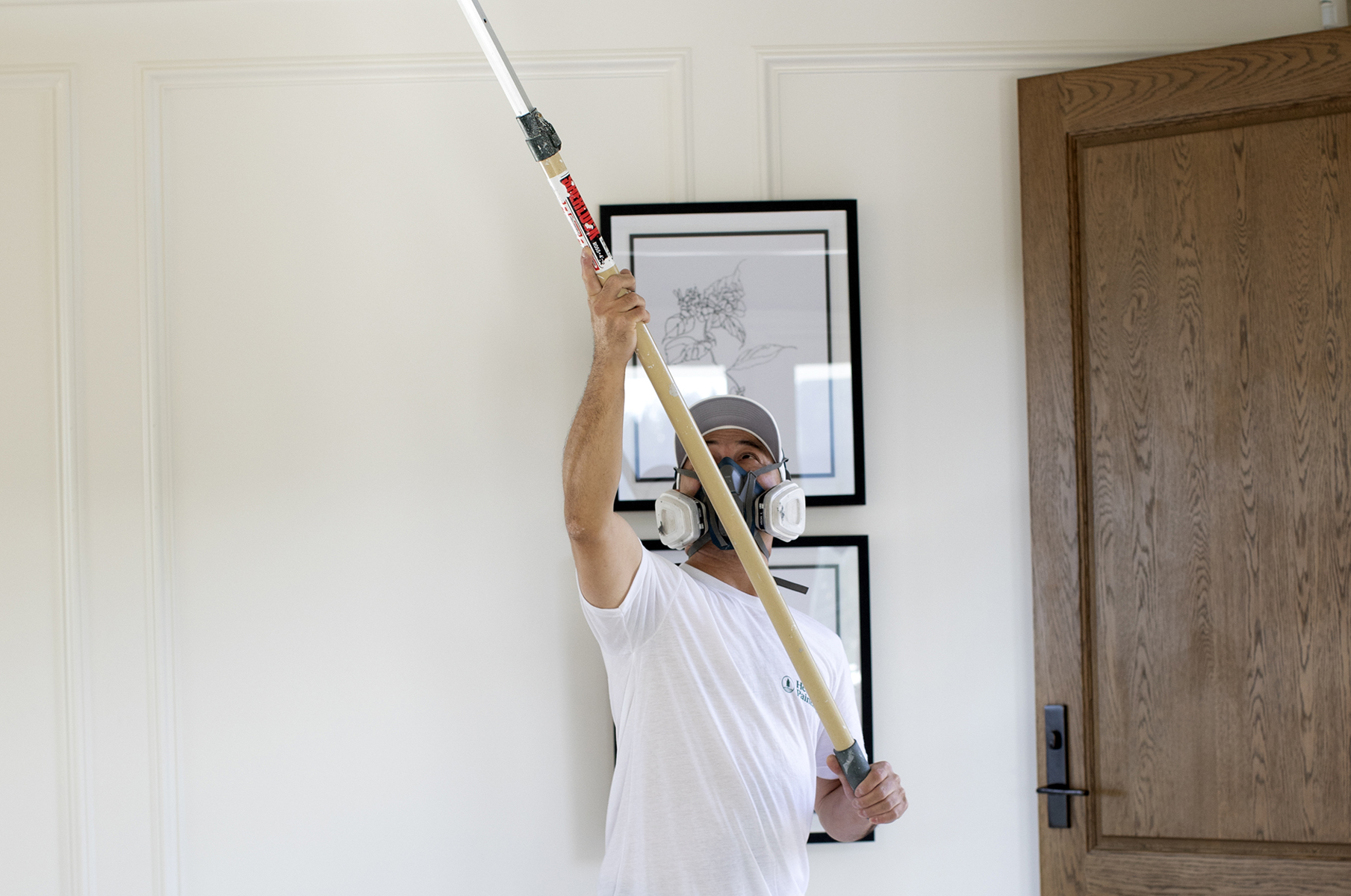
- Proper PPE and hygiene controls for workers
- HEPA cleanup, not standard vacuuming
- Waste handling in sealed containers and compliant disposal pathways
- Documentation such as clearance paperwork or records needed for strata or property managers
How Hemlock approaches the ceiling finish after the risk is handled
For popcorn ceiling upgrades, the goal is not only “removal,” it is a finished ceiling that looks perfect under Vancouver’s typical low winter light and large window glare. Hemlock’s process for popcorn ceilings starts with asbestos testing, then careful room preparation, then either removal or skim coating depending on the job. After that, we prime and paint and clean with HEPA-filtered vacuums so you are left with a dust-free home.
| Approach | Best when | Tradeoffs |
|---|---|---|
| Removal (non-asbestos confirmed) | You want maximum ceiling height and the texture scrapes cleanly | Requires careful protection and patching; can reveal underlying imperfections |
| Skim coat (level 5 finish) | Texture is painted, stubborn, or the substrate needs leveling | Takes multiple coats and drying time; typically a multi-day process |
If asbestos is confirmed, removal must be handled by appropriately certified and licensed asbestos professionals. After clearance, finishing and painting can proceed normally.
Common mistakes we see in Vancouver homes (and how to avoid them)
Popcorn ceilings are one of those projects where small shortcuts can create big problems. Here are the failure points we see most often when homeowners or general contractors rush the planning phase.
1) Starting work “just to see”
Scraping a corner, sanding a stain, or drilling a pilot hole can spread dust quickly. If asbestos is present, you have created an avoidable exposure and a more complex cleanup.
2) Using the wrong vacuum
Standard shop vacs are not designed to control asbestos fibres. If you need cleanup during suspect-material work, it needs to be HEPA-controlled and used within proper containment.
3) Underestimating how far dust travels
Open doorways, HVAC returns, and fans move fine particles throughout a home. Proper prep includes sealing vents and isolating the workspace before the first scrape.
4) Not planning for lighting and ceiling details
Once the ceiling is smooth, every imperfection shows under recessed lighting and daylight. The best results come from systematic patching, sanding (when safe), and a true level 5 finish before paint.
FAQ: popcorn ceiling asbestos in Vancouver
Can I tell if my popcorn ceiling has asbestos by looking at it?
No. WorkSafeBC warns that you cannot tell just by looking at a building material and you should not assume it is asbestos-free. Testing is the reliable path.
Is an intact asbestos popcorn ceiling dangerous?
Often, the risk is lower when the material is intact and undisturbed because fibres are not airborne. The risk rises when the material is damaged, friable, or disturbed during renovation.
What renovations are most likely to disturb ceiling texture?
Removal, sanding, skim coating, installing pot lights, moving fixtures, drilling anchors, and cutting openings for vents or speakers. If your plan includes any of those, test first.
Do I need a licensed asbestos contractor in BC?
In British Columbia, asbestos abatement work is subject to WorkSafeBC certification and licensing requirements. If asbestos is confirmed and removal is required, hire appropriately certified and licensed professionals.
What should I do if I already scraped a small area?
Stop work, minimize air movement, keep the area isolated, and arrange professional guidance for next steps. Avoid dry sweeping and standard vacuuming. Testing will determine whether you need a more controlled cleanup plan.
Can I cover a popcorn ceiling instead of removing it?
Sometimes. Covering with drywall can achieve a smooth look without scraping, but fixtures and penetrations still need safe handling and planning. If asbestos is confirmed, covering can be a lower-disturbance option for certain situations.
After asbestos work, can the ceiling be finished to look brand new?
Yes. Once the risk is handled and the space is cleared appropriately, a finishing team can skim coat to a level 5 finish and then prime and paint for a modern, smooth ceiling.
Clear next stepsGet a ceiling plan you can trust
Whether your ceiling needs testing, a smooth skim coat, or a full popcorn ceiling removal, we will map the safest path and set expectations for prep, protection, timeline, and finish quality.
Related resources
250+ five-star reviewsReady to upgrade your ceiling?
Tell us what you have now and what you want it to look like. We will confirm the safest scope, protect your home, and deliver a crisp, smooth ceiling finish you can feel proud of.