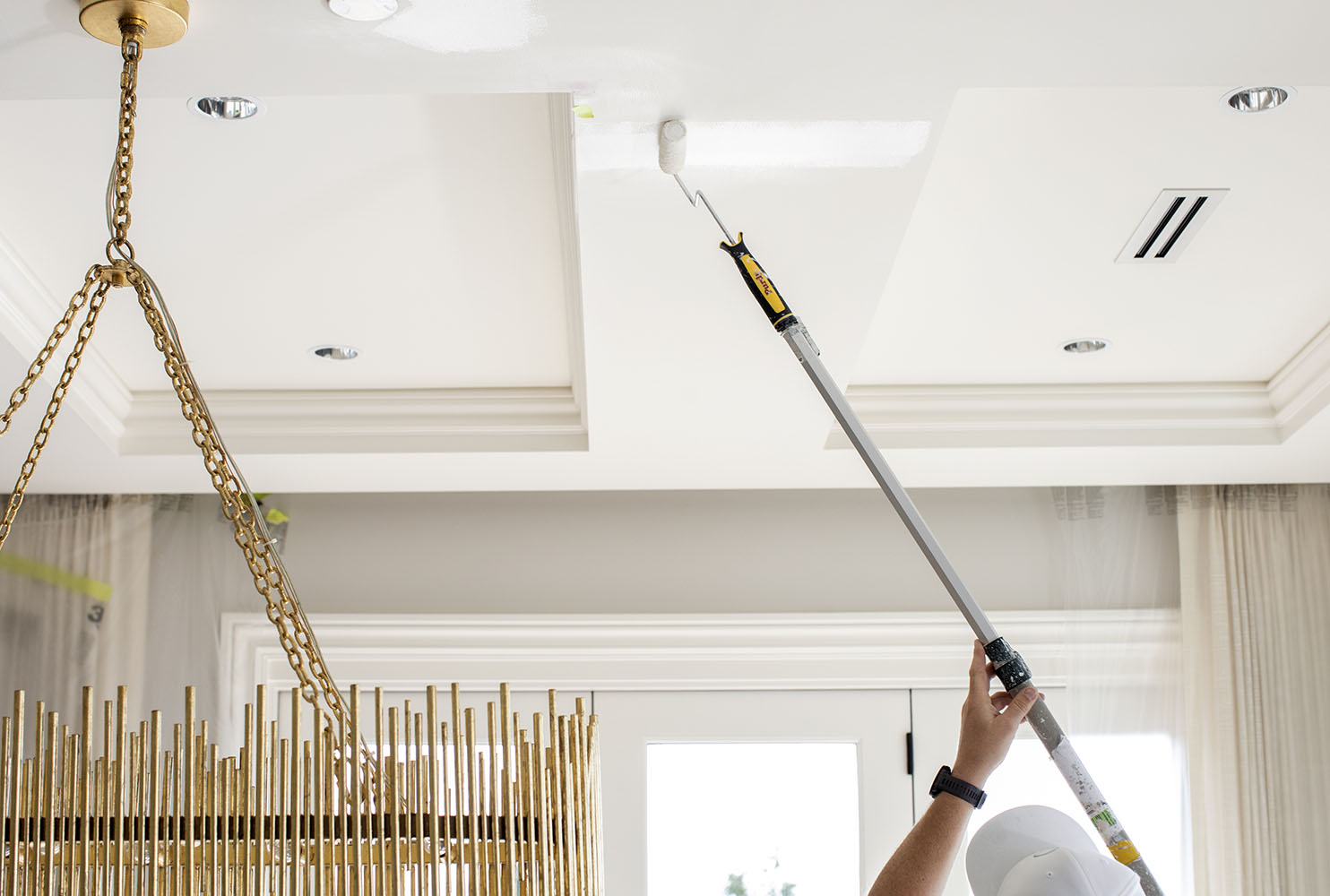
Yes, you can paint a popcorn ceiling, but only when the texture is stable, dry, clean, and safe to work around. If it is crumbling, water-stained, heavily patched, or possibly contains asbestos, painting can turn a small cosmetic project into a safety, mess, or finish problem.
- Asbestos-first decision guide
- Paint vs removal checklist
- Condo and family-home friendly
The fast answer: paint a popcorn ceiling when it is intact, previously painted or well-bonded, and you mainly want it to look cleaner or brighter. Remove or skim coat it when you want a smooth modern ceiling, the texture is failing, there are stains or repairs, or the ceiling may contain asbestos and needs professional handling.
Paint if the ceiling is sound and the goal is a refresh.
Test first if the home is older or the texture has never been checked.
Remove or skim if you want the cleanest long-term finish.

Not sure whether your ceiling should be painted, skim coated, or removed?
Hemlock can inspect the condition, walk you through the safest route, and quote the work clearly before anything is disturbed.
Paint vs remove: the practical decision
A popcorn ceiling is not automatically a problem. The question is whether the existing texture is worth preserving. Painting refreshes what is already there. Removal or skim coating changes the ceiling itself.
| Condition or goal | Better choice | Why it matters |
|---|---|---|
| The texture is firm, dry, and not flaking when lightly touched. | Paint | A careful coat of flat ceiling paint can brighten the room without the cost and disruption of removal. |
| The ceiling is yellowed, dusty, or uneven in colour but otherwise stable. | Paint, often with spot priming or stain-blocking primer | Painting can hide age-related discoloration, but stains need to be sealed or they may bleed through. |
| The home was built before 1990 and the ceiling texture has not been tested. | Test before painting or removal | Asbestos was used in many older building materials in Canada, including surface treatments and textured ceiling coat. Disturbing suspect material can release fibres into the air.1, 3 |
| The popcorn is soft, crumbly, loose, or falling off. | Remove, repair, or skim coat after safety checks | Paint adds weight and moisture. Weak texture can release, clump, or peel during application. |
| There are water stains, ceiling cracks, or prior patch marks. | Diagnose and repair first, then paint or skim | Paint is not a repair. Moisture issues, failed drywall tape, or mismatched patches often show through texture. |
| You want a modern smooth ceiling, better light reflection, or a cleaner resale look. | Remove or skim coat | Paint will refresh the texture, but it will not make it smooth. For that, see the cost and removal options for Vancouver popcorn ceilings. |
| The ceiling is in a bathroom, laundry room, or humid area. | Paint only after moisture checks | Texture can hold dust and moisture. Product choice matters more in damp rooms, especially on ceilings and trim. |
Safety rule: do not scrape, sand, drill, cut, or aggressively roll an older popcorn ceiling until asbestos risk has been addressed. Health Canada says asbestos fibres can be released during renovation activities such as sanding, scraping, removing, breaking apart, and disturbing building materials.1
Before you touch it: asbestos risk changes the answer
In Vancouver and across B.C., the most important question is not “can paint stick to popcorn texture?” It is “can this ceiling be safely disturbed?” WorkSafeBC says asbestos was widely used in B.C. building materials until the early 1990s, and textured ceiling coat is one of the materials that often contained asbestos.2, 3
The tricky part is that you usually cannot identify asbestos by sight. CCOHS states that the only way to know whether a product contains asbestos is to have it tested by a laboratory.6 That is why Hemlock’s Vancouver asbestos testing guide for popcorn ceilings is the first internal resource to read if your home is older, recently purchased, or undocumented.
Is an asbestos popcorn ceiling dangerous if you leave it alone?
Not always. Health Canada says there are no significant health risks if asbestos-containing materials are left undisturbed, sealed behind walls or floorboards, isolated, or tightly bound in products that are in good condition.1 HealthLink BC gives similar guidance: asbestos is generally not released when it is enclosed or tightly bound within an intact product.4
That is why the decision is not automatically “remove it now.” Sometimes the safer route is testing, professional assessment, and a plan that avoids disturbance unless the ceiling actually needs work.
Can you just paint over asbestos popcorn ceiling?
This is where homeowners should be careful. Painting sounds gentle compared with scraping, but rolling can still loosen delicate texture. CCOHS specifically says painting or attempting to encapsulate asbestos products yourself is not recommended because the act of painting may loosen fibres and make them airborne.6 If asbestos is suspected or confirmed, talk to qualified professionals before choosing paint, encapsulation, removal, or skim coating.
Test first if:
- The home was built before 1990.
- The ceiling has never been sampled.
- You plan to scrape, sand, drill, repair, skim, or remove texture.
- The ceiling is cracked, water-damaged, crumbling, or shedding dust.
- You are doing broader renovations in the same room.
Call a pro if:
- Asbestos is confirmed or likely.
- You see damaged texture or debris.
- You need removal, containment, or disposal.
- The ceiling is in a condo where strata rules apply.
- You need a documented scope before comparing quotes.
When painting a popcorn ceiling makes sense
Painting is the right move when the ceiling is structurally fine and your goal is cosmetic. In that situation, a careful paint job can make the room feel brighter, cleaner, and more finished without the disruption of full ceiling refinishing.
- The texture is well bonded. It does not crumble, shed, or pull away when gently inspected.
- The ceiling has already been painted before. Previously painted popcorn often handles another coat better than raw, water-soluble texture.
- You are not trying to hide major damage. Paint can unify colour, but it will not fix cracks, sagging drywall, stains, or mismatched patches.
- You are comfortable keeping the texture. Painting makes popcorn look newer. It does not make it look smooth.
- The room needs a practical refresh. Bedrooms, hallways, family rooms, and rental units often benefit from painting when the ceiling is intact.
If the ceiling is part of a broader room refresh, it is worth coordinating it with interior painting. Ceiling work usually comes before wall painting so splatter, cut lines, and touch-ups can be handled in the right order. Benjamin Moore also recommends painting the ceiling before the walls and covering everything below the ceiling with drop cloths.8
When removal or skim coating is the better investment
Removal or skim coating is more involved, but it is the better choice when the texture itself is the issue. If you paint a failing or outdated ceiling, you still own a failing or outdated ceiling. It is just a freshly painted one.
| Reason to remove or skim | What paint cannot solve | Better next step |
|---|---|---|
| You want a smooth, modern ceiling. | Paint preserves the popcorn profile. | Review Hemlock’s popcorn ceiling removal and painting service. |
| The ceiling has visible water stains. | Paint may hide discoloration temporarily, but it will not fix the cause. | Repair the source of moisture, prime properly, then paint or skim. |
| The texture is falling off in patches. | Rolling can pull more texture down. | Assess adhesion and hazardous-material risk before coating. |
| There are patched areas with different texture. | Fresh paint often makes uneven texture more obvious under daylight. | Skim coat or refinish the plane for consistency. |
| You are selling or renovating a high-visibility room. | Fresh popcorn can still read as dated. | Compare paint refresh cost against removal or skim coat pricing. |
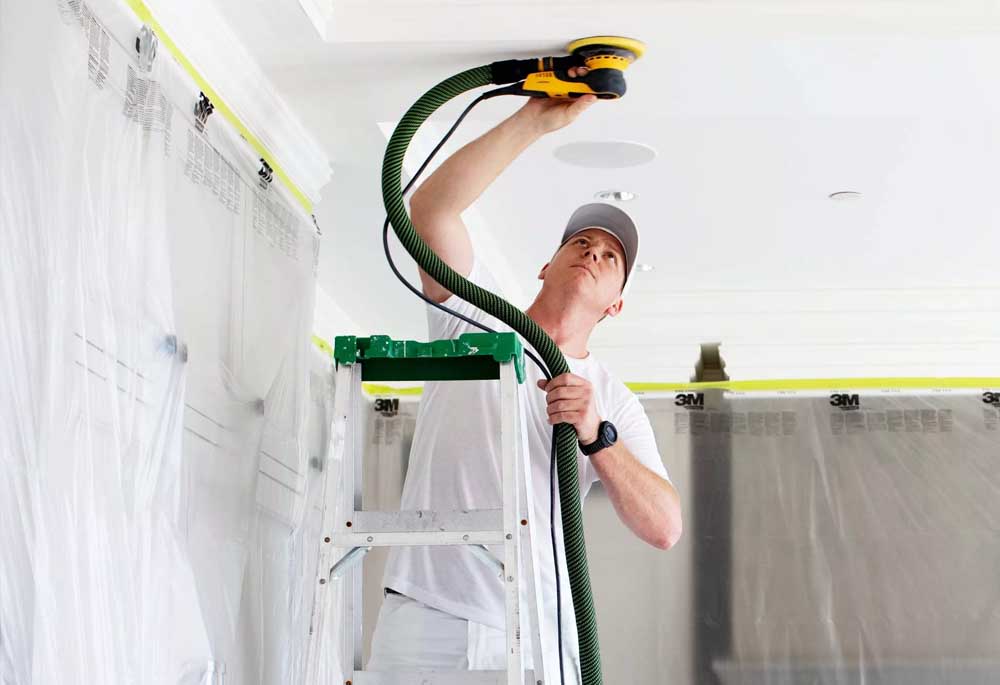
Hemlock’s popcorn ceiling process includes asbestos testing, room preparation, texture removal or skim coating depending on the job, drywall compound, sanding to a smooth finish, priming, painting, and HEPA-filtered cleanup. That matters because popcorn work is not just a painting task. It is ceiling preparation, dust control, finishing, and paint in one sequence.
What paint actually does to popcorn texture
Paint adds colour, opacity, and a cleaner finish. It also adds moisture and weight. That is why technique matters more on popcorn texture than on a smooth ceiling.
Fresh paint can improve:
- yellowing from age
- minor grey dustiness
- uneven sheen from older touch-ups
- rooms that feel dim because the ceiling has darkened
- overall freshness before repainting walls
Fresh paint cannot reliably fix:
- asbestos risk
- loose texture
- active moisture damage
- cracks in drywall or failing tape
- heavy nicotine staining without the right primer
- the dated profile of popcorn texture
The best paint and tools for a popcorn ceiling
For most popcorn ceilings, use a flat or dead-flat ceiling paint. Flat paint helps minimize glare and hides ceiling imperfections better than shinier finishes. Benjamin Moore describes its Waterborne Ceiling Paint as a dead-flat paint formulated to hide most ceiling imperfections and minimize lap marks and splatter.8
Sherwin-Williams also emphasizes room preparation before ceiling painting, including clearing furniture and covering remaining furniture and floors to protect from drips and spatter.9 On popcorn texture, that protection matters because a thicker roller or sprayer can create more overhead fallout than a normal wall paint job.
Product choices
- Flat or dead-flat ceiling paint
- Stain-blocking primer where needed
- Low-odour or low-emission products when appropriate
- High-hide white for older yellowed ceilings
- Moisture-appropriate products in bathrooms and laundry rooms
Tool choices
- Airless sprayer for the most even professional coating
- Thick-nap roller if rolling is safe for the texture
- Extension pole to reduce pressure and fatigue
- Angled brush for edges and fixtures
- Full masking, plastic, and drop cloth protection
Spray vs roll: which is better?
Spraying is often the cleaner-looking professional method for popcorn ceilings because it coats texture from multiple angles without dragging a roller across fragile bumps. It also requires more masking. Rolling uses simpler equipment, but it can pull down weak texture if the roller is overloaded, too wet, or pressed too hard.
| Method | Best for | Main risk | Pro tip |
|---|---|---|---|
| Spraying | Large ceilings, fragile texture, occupied homes where even coverage matters | Overspray if masking is weak | Mask walls, floors, cabinets, vents, lights, and fixtures carefully. |
| Rolling | Small rooms, previously painted texture, strong and well-bonded ceilings | Pulling off texture or leaving lap marks | Use light pressure, keep a wet edge, and avoid repeated passes over wet popcorn. |
| Brush only | Edges, corners, fixture cut-ins, tiny repairs | Heavy brush marks or broken texture | Dab or feather carefully instead of scrubbing. |
How to paint a popcorn ceiling without wrecking the texture
If the ceiling is confirmed safe to paint and the texture is stable, this is the homeowner-friendly sequence. For a more technique-focused walkthrough, see Hemlock’s guide on painting a popcorn ceiling without making a mess.
Confirm it is safe to disturb
For older homes, undocumented ceilings, or damaged texture, test before disturbing. WorkSafeBC advises homeowners, strata councils, and property managers to get homes tested before renovation, demolition, or maintenance work that could disturb asbestos.3
Check adhesion gently
Do not scrape. Look for loose areas, cracks, water damage, sagging drywall, or texture that sheds easily. If it fails a gentle inspection, stop and reassess.
Protect the room fully
Remove what you can, then cover floors, furniture, cabinets, windows, walls, and fixtures. Ceiling paint has gravity working against it, and popcorn texture holds more product than a smooth wall.
Dry-clean only if the ceiling can handle it
Use a soft duster or vacuum with a brush attachment only if the texture is stable and confirmed safe. Avoid wet scrubbing. Popcorn texture can soften, smear, or break down with moisture.
Spot prime stains
Water stains, smoke staining, and tannin marks need the right primer before the finish coat. Otherwise, the ceiling may look good for a few days and then show stains again.
Apply paint with minimal disturbance
If spraying, use even passes and avoid overloading the texture. If rolling, use a thick-nap roller, light pressure, and as few passes as possible. Benjamin Moore recommends using a roller sleeve appropriate for the ceiling texture.8
Let the first coat dry before judging coverage
Wet ceiling paint can look patchy while drying. Let it dry according to the product label before deciding whether a second coat is needed.
Ventilate during and after painting
Paints and coatings can emit VOCs during drying and curing. Health Canada recommends increasing ventilation when using paints and choosing lower-emission products where possible.10
A better ceiling starts with the right scope.
Paint, skim coat, or remove? Hemlock’s in-person estimate helps you compare the options before committing to a messy or expensive path.
Common mistakes that make popcorn ceilings worse
Painting without safety checks
If the home is older and the ceiling has not been tested, jumping straight to paint can create unnecessary risk. BCCDC warns that touching or moving asbestos-containing material can release fibres into the air, which can be dangerous when inhaled.5
Using too much pressure
A roller should coat the texture, not scrub it. Pressing hard can flatten the bumps, pull down wet texture, and leave obvious roller tracks.
Skipping stain blocking
Ceiling stains need diagnosis and proper primer. Painting over water staining without fixing the cause is a cosmetic delay, not a solution.
Using shiny paint
Satin and semi-gloss finishes can highlight every bump and repair. A flat ceiling finish is usually more forgiving.
Trying to remove texture dry
Dry scraping creates dust and can be especially hazardous if asbestos or lead-era coatings are present. The EPA notes that renovation, repair, and painting work in pre-1978 buildings with lead-based paint can create dangerous lead dust.12
Comparing vague quotes
One quote may include masking, testing coordination, priming, two finish coats, cleanup, and warranty. Another may only include paint. Use an apples-to-apples scope when you compare painting quotes in Vancouver.
What about condos and apartments?
Condo popcorn ceilings need extra care because the ceiling may be part of a strata-managed building, access may be limited, and dust control affects neighbours as well as your unit. If the ceiling is older, testing and documentation can also matter before a contractor disturbs texture.
If you are refreshing a condo before moving in, painting may be enough if the ceiling is safe and stable. If you are renovating a higher-end condo or planning to repaint the entire unit, skim coating can be worth considering because a smooth ceiling improves the whole visual field. For budgeting context beyond ceilings, Hemlock’s guide to the cost to paint a condo in Vancouver can help you think through room size, access, scope, and timing.
How to choose between painting, skim coating, and full removal
Homeowners often think there are only two options: paint it or scrape it. In practice, there are three useful paths.
| Option | Best when | Result | Disruption level |
|---|---|---|---|
| Paint the popcorn | The texture is stable, safe, and you can live with the look. | Cleaner, brighter popcorn texture. | Lowest |
| Skim coat over texture | Removal is not ideal, but you want a smooth ceiling. | A new smooth plane after drywall compound, sanding, priming, and painting. | Medium to high |
| Remove the texture | The texture is suitable for removal and the goal is a clean modern finish. | Texture removed, surface repaired, primed, and painted. | Highest |
If you are hiring a professional, ask for a written scope that separates testing, protection, repairs, priming, paint products, number of coats, cleanup, and warranty. Hemlock’s painter contract essentials are useful when the ceiling is part of a larger interior project.
What a professional quote should include
A good popcorn ceiling quote should make the path clear. You should not have to guess whether the work includes safety planning, room protection, primer, paint, cleanup, or repairs.
- Ceiling condition notes: texture stability, stains, cracks, patches, and moisture concerns.
- Hazardous material plan: whether asbestos testing is needed before disturbance.
- Room protection: floors, walls, furniture, cabinets, vents, lighting, and access areas.
- Preparation method: dry cleaning, repairs, spot priming, skim coating, sanding, or removal.
- Paint system: primer type, finish paint, application method, and number of coats.
- Cleanup standard: daily cleanup, final cleaning, dust control, and leftover paint labelling.
- Warranty and follow-up: what is covered and what happens if touch-ups are needed.
If you are still deciding who to hire, this is also where a structured painter hiring checklist helps. Popcorn ceiling work rewards patience, preparation, and transparent scope.
So, should you paint or remove your popcorn ceiling?
Paint it if the ceiling is safe, stable, and you want a cleaner version of the texture you already have. Remove or skim it if the texture is damaged, dated, uneven, or standing in the way of the room you actually want.
Best low-disruption choice: paint a stable, tested, intact ceiling with a flat ceiling paint.
Best long-term design choice: remove or skim coat when you want a smooth modern ceiling.
Best safety choice: test first when the home is older, the material is unknown, or any work could disturb the texture.
Ready to make the ceiling look right?
Whether the answer is paint, skim coat, or removal, Hemlock will help you choose the cleanest and safest path for your Vancouver home.
Frequently asked questions
Can you paint a popcorn ceiling with a roller?
Yes, if the texture is stable and safe to disturb. Use a thick-nap roller, light pressure, and minimal passes. If the texture is fragile, spraying is usually safer for the finish because it avoids dragging across the bumps.
Do I need to prime a popcorn ceiling before painting?
Not always. A previously painted, clean, unstained ceiling may not need full priming. Use stain-blocking primer for water marks, smoke staining, patched areas, or uneven absorption. Benjamin Moore notes that most previously painted, undamaged, and unstained ceilings do not require primer, but special situations do.8
Can I paint over a water-stained popcorn ceiling?
Only after fixing the source of the stain. Once the leak or moisture issue is resolved, the stain should be sealed with the right primer before ceiling paint is applied.
Will painting popcorn ceiling make it harder to remove later?
Often, yes. Paint can bind the texture more tightly and make future removal more labour-intensive. If you already know you want a smooth ceiling, compare removal or skim coating before painting.
Is painting cheaper than popcorn ceiling removal?
Usually, yes, because painting keeps the existing texture. Removal or skim coating adds preparation, containment, drywall finishing, sanding, priming, and repainting. For local budgeting, start with Hemlock’s Vancouver popcorn ceiling removal cost guide.
Can I remove popcorn ceiling myself?
Do not remove it yourself until hazardous-material risk has been addressed. CCOHS says asbestos fibres can easily become airborne during removal, and suspected material should be tested before renovations disturb it.6
What colour should a popcorn ceiling be?
Flat white is the safest choice for most rooms because it brightens the space and keeps attention away from texture. In design-forward rooms, a soft wall-colour tint can work, but darker colours can emphasize texture. For inspiration, see Hemlock’s guide to ceiling paint colours.
Should bathroom popcorn ceilings be painted or removed?
It depends on moisture, ventilation, and texture condition. Bathrooms need products that suit humidity, and any staining or mildew-like marks should be diagnosed first. Hemlock’s bathroom paint guide covers paint choices for bathroom walls, ceilings, and trim.
References
- Health Canada, “Asbestos and your health.”
- WorkSafeBC, “Asbestos.”
- WorkSafeBC, “A home renovation shouldn’t actually take your breath away.”
- HealthLink BC, “Asbestos: When should I worry?”
- BC Centre for Disease Control, “Asbestos.”
- Canadian Centre for Occupational Health and Safety, “Asbestos in the Home.”
- U.S. Environmental Protection Agency, “Protect Your Family from Exposures to Asbestos.”
- Benjamin Moore Canada, “How To Paint A Ceiling In 4 Easy Steps.”
- Sherwin-Williams, “How to Paint a Ceiling.”
- Health Canada, “Volatile organic compounds.”
- Environment and Climate Change Canada, “Volatile organic compound concentration limits for architectural coatings regulations.”
- U.S. Environmental Protection Agency, “Lead Renovation, Repair and Painting Program.”