Exterior Painting Cost in Vancouver (2026): What Drives Price Up or Down
A clear, homeowner-first breakdown of real exterior house painting prices in Vancouver, plus exactly what changes your estimate so you can compare quotes confidently.
-
Most Vancouver exteriors fall around $4,000 to $20,000+
The biggest price swings come from prep, repairs, and access, not just square footage. -
Cost per sq ft is only a starting point
Two homes that are the same “size” can require completely different labour-days. -
Dry windows matter in Vancouver
Washing, drying, priming, and curing take time. Weather can change both schedule and cost.
This guide is designed to help you understand pricing and compare quotes. Final pricing depends on a site visit, condition, and access.
Table of contents
- Realistic 2026 price ranges in Vancouver
- Cost examples by home type
- The 9 biggest price drivers
- What a professional quote should include
- How quotes are built (so you can compare fairly)
- Common add-ons and typical ranges
- Vancouver timing and weather considerations
- How to lower cost without sacrificing durability
- DIY vs pro: when DIY gets expensive
- Questions to ask exterior painters in Vancouver
- FAQs
If you are pricing exterior painting cost in Vancouver for 2026, a realistic planning range for many homes is $4,000 to $20,000+. Most of the quote variation comes from prep and repairs, plus height and access. That is why “cost per square foot” can be helpful for a first guess, but it cannot replace a clear scope.
If one quote is dramatically lower, it is often because the scope quietly assumes minimal scraping, limited priming, or fewer coats than your home actually needs. A cheap exterior that fails early is the most expensive outcome.
1) Realistic exterior painting price ranges in Vancouver (2026)
Exterior house painting in Vancouver is priced around three things: (1) how many labour-days the job takes, (2) what access equipment is required, and (3) how durable the coating system needs to be for your surfaces. That is why two homes with similar square footage can come in thousands of dollars apart.
| Project type | Typical Vancouver range (2026) | What usually makes it land here |
|---|---|---|
| Small repaint, straightforward access Small home, townhouse, or simple elevations |
$3,500 to $6,000 | Minimal peeling, light prep, fewer ladders or staging days, limited trim detail. |
| Mid-size detached, moderate prep Many Vancouver family homes |
$8,000 to $15,000 | Real scraping and caulking, multiple colours, typical ladder work, some repairs or priming. |
| Large home, high detail, or tough access Steep grade, 2.5 storey, lots of trim |
$15,000 to $25,000+ | Heavy prep, bare wood priming, staging or lift planning, ornate trim, more labour-days. |
A cost-per-square-foot range many homeowners hear is about $1.50 to $6.00 per square foot. Use it only as a rough starting point. A better approach is to focus on the scope: what is being painted, what prep is included, what repairs are included, and how access is handled.
If your exterior has widespread peeling or you can see bare wood, assume you will be in a higher bracket. If your home is tall, on a slope, or has many tight corners and trim profiles, assume more labour-days.
Quick exterior cost range estimator (rough)
This gives a conservative range to help you plan. It is not a quote. A site visit is the only way to price prep, repairs, and access accurately.
Typical mid-size detached with moderate prep and normal access.
Tip: If you want quotes you can actually compare, ask each painter to list prep steps, priming locations, number of coats, and how repairs are handled.
2) Cost examples: what different Vancouver homes can cost
The examples below assume professional-grade prep, appropriate priming, premium exterior paint, proper protection of landscaping and windows, and a full cleanup and final inspection. If a quote is far below these ranges, it may be under-scoped on prep, repairs, coats, or access.
Example: 1,200 to 1,600 sq ft bungalow
Likely range: $4,000 to $8,000. Fewer elevations and less staging, unless peeling or bare wood increases prep days.
Example: 2-storey detached (mid-size)
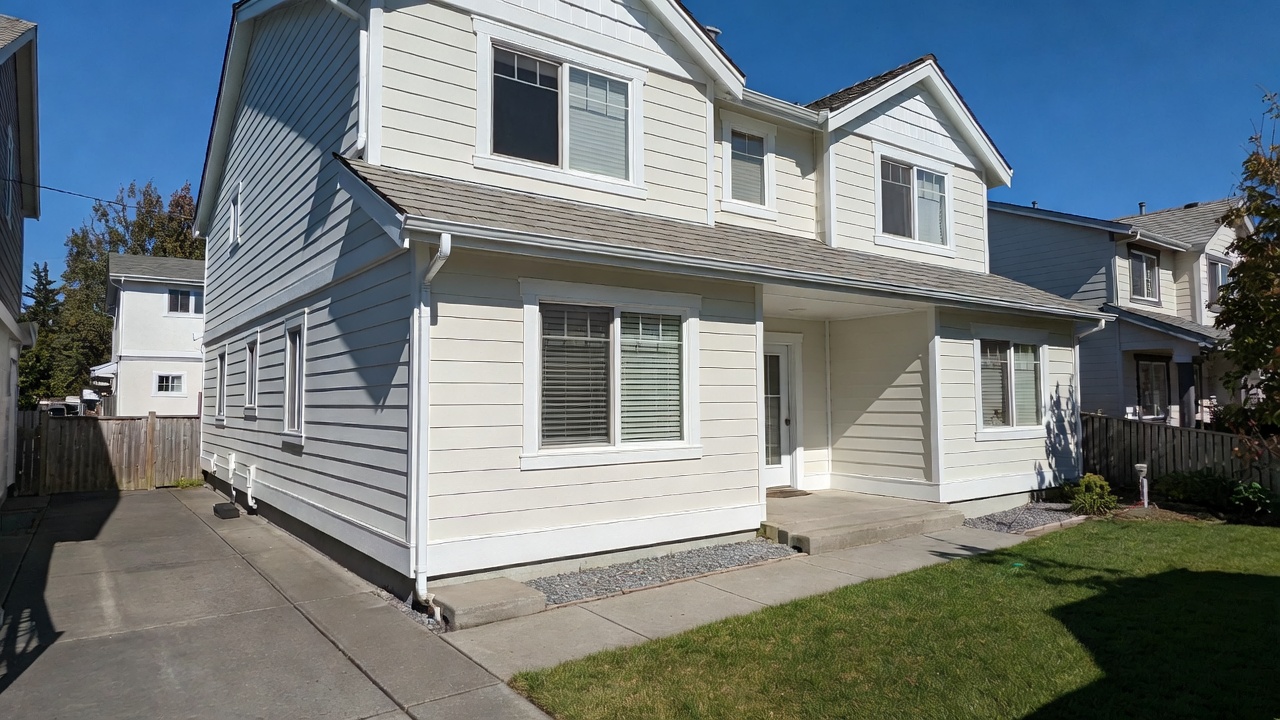
Likely range: $8,000 to $15,000. Typical ladder work, real caulking, trim density, and multiple colours.
Example: character home with ornate trim
Likely range: $15,000 to $30,000+. Detail work is slow, and repairs and access planning often drive labour-days.
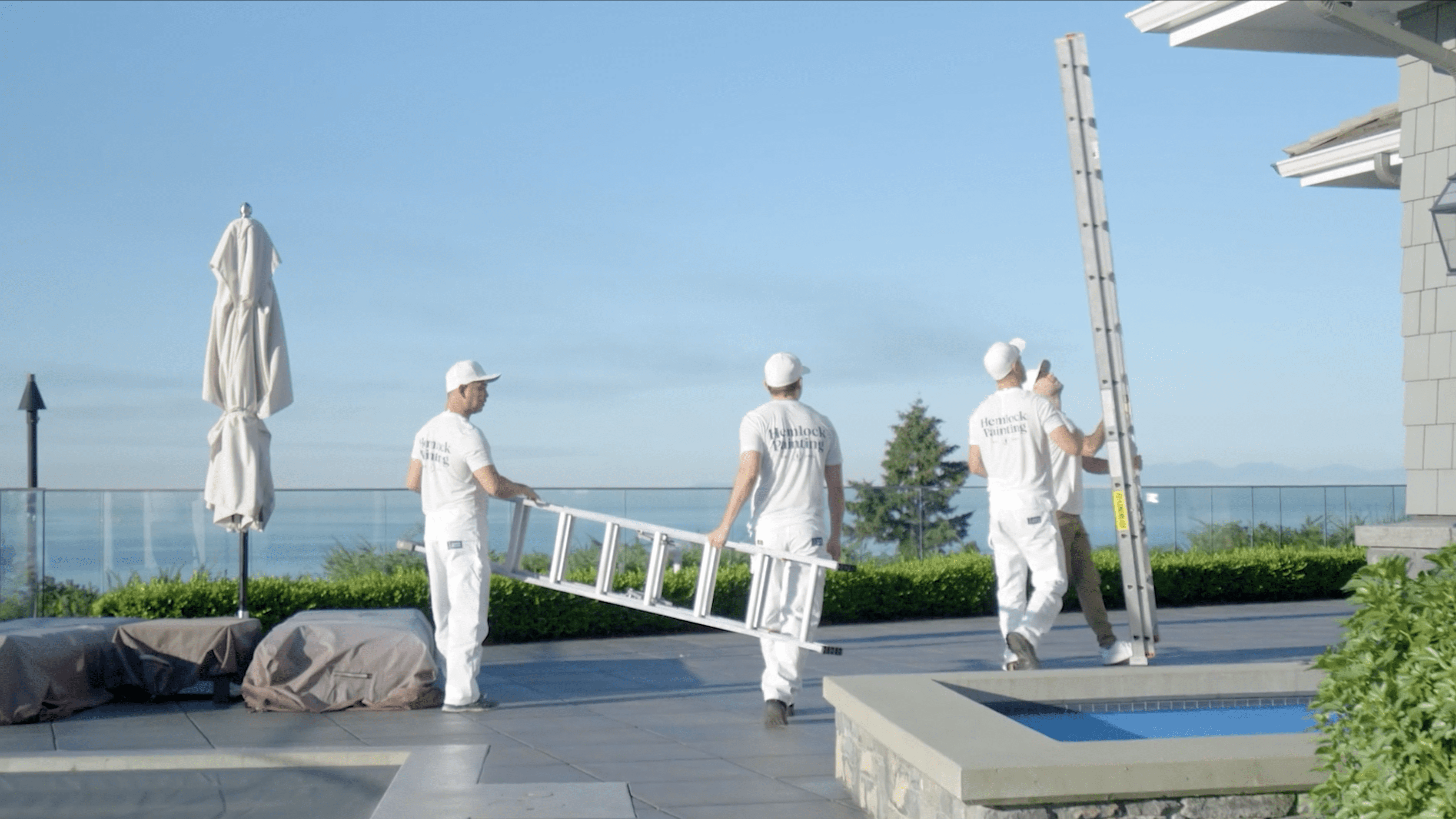
After washing, hidden failures show up: flaking paint, hairline cracks, soft trim edges, and exposed wood fibres. A professional scope includes a plan for what happens if prep reveals more work than expected.
3) The 9 biggest factors that push exterior price up or down
When homeowners ask about house exterior painting cost, they are usually asking one of two things: “What is the normal range?” and “What is going to make my quote higher than my neighbour’s?” Here are the real drivers.
1) Prep and repairs (the real budget driver)
Prep is not a quick step. It can be the majority of the project. Scraping, sanding, patching, caulking, and priming are labour-heavy, but they are what keeps paint from failing early in Vancouver’s wet climate.
- Light prep: small scrapes, quick sand, limited caulk and spot prime.
- Moderate prep: multiple elevations need scraping, gaps get recaulked, repairs need feathering, bare spots are primed.
- Heavy prep: widespread peeling, wood checks, and a bigger priming plan to rebuild adhesion.
2) Height, slope, and access (safety and time)
A tall home, steep grade, or tight side yard changes everything. It can shift the job from simple ladder work to planned staging or lift access. Access also affects productivity: if painters are repositioning ladders constantly or working around landscaping and tight clearances, it adds hours quickly.
3) Surface type (what you are painting)
Different materials take different prep and coatings. Cedar, fibre cement, stucco, and metal each require a different approach, and that changes labour and material usage.
| Surface | What often increases cost | What helps keep cost reasonable |
|---|---|---|
| Cedar siding | Peeling edges, tannin bleed risk, more sanding and priming on bare areas. | Stable existing coating, targeted spot-priming, realistic caulk scope. |
| Fibre cement | Seam caulking, multiple trims, joint movement, ladder time on taller elevations. | Sound substrate, fewer colour changes, clear access. |
| Stucco | Higher paint volume, porous areas, careful timing for drying and coverage. | Solid surface with minimal cracking and proper patching plan. |
| Metal (railings, flashing) | Rust treatment, specialized primers, tighter masking to protect surrounding surfaces. | Minimal corrosion and a defined scope limited to key elements. |
4) Condition of the existing coating
If your paint is mostly bonded and you are refreshing the colour, your job is a repaint. If the coating is failing, your job becomes surface restoration. This is the single biggest reason exterior painting estimates can vary so widely.
5) Priming requirements and number of coats
Primer is not always needed everywhere on a repaint. It is commonly needed on bare substrate, heavy sand-through areas, repairs, or spots with staining risk. Number of coats matters too. Some surfaces will genuinely need two coats for uniform coverage and durability, especially with colour changes and high sun exposure.
6) Colour count and cut-in detail
Two colours (body and trim) is usually more efficient than three or four. High-contrast colour changes also slow the work because cut lines need more precision, and some colours require more passes for consistent coverage.
7) Trim and window density
Trim is slow work. Lots of soffits, fascia edges, window trims, and detail features increase labour hours even if the home’s footprint is not huge.
8) Timing (peak season demand and weather buffers)
Vancouver’s exterior season is finite. When everyone wants the same dry window, the schedule is tighter and rescheduling becomes harder. Longer dry buffers are also needed after washing and before final coats if you have shaded elevations that hold moisture.
9) Warranty, insurance, and crew quality
Professional operators who price jobs with proper prep, documented process, and warranty support often look different than quick, low-scope bids. You want clarity on who is doing the work, how the job is supervised, how issues are handled, and what warranty support looks like after the last coat.
Want a quote you can trust (and compare fairly)?
The fastest way to avoid pricing surprises is a fixed scope: clear prep steps, defined repair allowances, primer locations, coat count, access plan, and cleanup. If you are collecting quotes from exterior painters in Vancouver, use this guide as your checklist.
4) What a professional exterior quote should include (and what it often excludes)
If you want to compare exterior painting quotes in Vancouver, focus less on the total and more on the scope. A professional scope reads like a process, not like a one-line “paint exterior” description.
Included items you should expect
-
Cleaning and dry time: wash to remove dirt, chalking, mildew, and contaminants, plus realistic time to dry before coatings.
-
Protection: masking and covering where needed (windows, fixtures, decks, plants, adjacent surfaces).
-
Surface preparation: scrape loose paint, sand edges, patch minor defects, recaulk gaps, and address obvious adhesion issues.
-
Priming plan: spot-prime bare substrate and repair areas, with primer type specified.
-
Coat count: number of coats on siding and trim, plus application method (brush, roll, spray and back-roll) based on surface.
-
Cleanup and inspection: daily site tidying, final cleanup, walkthrough, and touch-ups.
Items often excluded unless specified
Exclusions are not automatically bad. They just need to be clear so you can budget correctly and avoid misunderstandings. Common exclusions include rot repair, extensive carpentry, replacing fascia boards, deck refinishing, fence painting, and window glazing repair.
If the quote does not explicitly mention prep steps (scrape, sand, caulk, prime) and coat count, you are not looking at a complete scope. Ask for the scope in writing before you compare price.
5) How exterior painting quotes are built (so you can compare apples to apples)
Most professional painting companies structure pricing around labour and production, then confirm material quantities and access requirements. When you compare quotes, you want to translate each one into the same buckets.
A) What surfaces are included
A clear quote lists exactly what is being painted: siding/body, trim, fascia, soffits, doors, garage doors, railings, and any outbuildings. If something is not listed, assume it may not be included.
B) Coating system: primers and coats
The quote should specify whether primer is included and where it will be used. It should also specify how many coats are planned for the siding and trim. In Vancouver, skipping primer on bare substrate is a common reason for early failure.
C) Access plan: ladders, staging, or lifts
Access affects both time and safety planning. If your home is tall, has limited clearances, or sits on a slope, it may require staging or lift days. A quote that ignores access is not truly comparable to one that includes it.
D) Repairs and changes: how surprises are handled
Washing and scraping sometimes reveal hidden issues. The most homeowner-friendly quotes explain how repairs are handled: a defined repair allowance, a clear hourly rate, or a written change order process with approval before additional work begins.
E) Warranty and post-job support
Warranty terms should be written. Ask what is covered, what is excluded (for example, underlying moisture intrusion), and what the process is if you see an issue later. A warranty matters most when it is supported by a clear scope and good prep.
Compare quotes using this 5-point checklist Save this
- Prep steps: Are scrape, sand, caulk, patch, and prime explicitly listed?
- Coat count: Is the number of coats stated for siding and trim?
- Access plan: Does the quote acknowledge height, slope, and staging needs?
- Repairs: How are surprises handled after washing and prep?
- Warranty: Is it written, and does it match the scope?
What “cheap” often means in exterior painting Avoid this
Cheap often means the quote assumes minimal scraping, minimal priming, a fast single-coat refresh, or fewer labour-days than the job requires. The risk is not just cosmetic. Poor prep can lead to peeling, water intrusion through failed caulking lines, and premature repainting.
What “expensive” often means (and why it can be worth it) Know why
Higher quotes often reflect heavier prep, more detailed cut lines, more trim density, and a realistic access plan. If the scope is clear and the crew quality is strong, higher pricing can translate into longer-lasting results and fewer post-job headaches.
6) Common add-ons and typical ranges
Add-ons vary by condition, complexity, and access. Use these ranges as directional planning numbers, not fixed pricing. The correct question is always: “How much prep and masking does this add, and how many labour-hours does it take?”
| Add-on | Typical range | What changes the price most |
|---|---|---|
| Front door (paint) | $150 to $400+ | Sanding, dents and repairs, glass masking, multiple coats, drying time between coats. |
| Garage door | $250 to $800+ | Size, surface condition, masking edges and hardware, roller texture control. |
| Railings / balusters | $400 to $2,000+ | Density (lots of pickets), rust treatment, brush detail time, access. |
| Fence (per side) | $6 to $15+ per linear foot | Stain vs paint, existing peeling, vegetation clearing, boards spacing and overspray control. |
| Deck paint or stain | $1,000 to $4,000+ | Stripping needs, repairs, railings, surface area, and drying windows. |
| Shed / outbuilding | $500 to $2,000+ | Condition, access, and how many surfaces (trim, doors) are included. |
7) Vancouver timing and weather: how season affects price and schedule
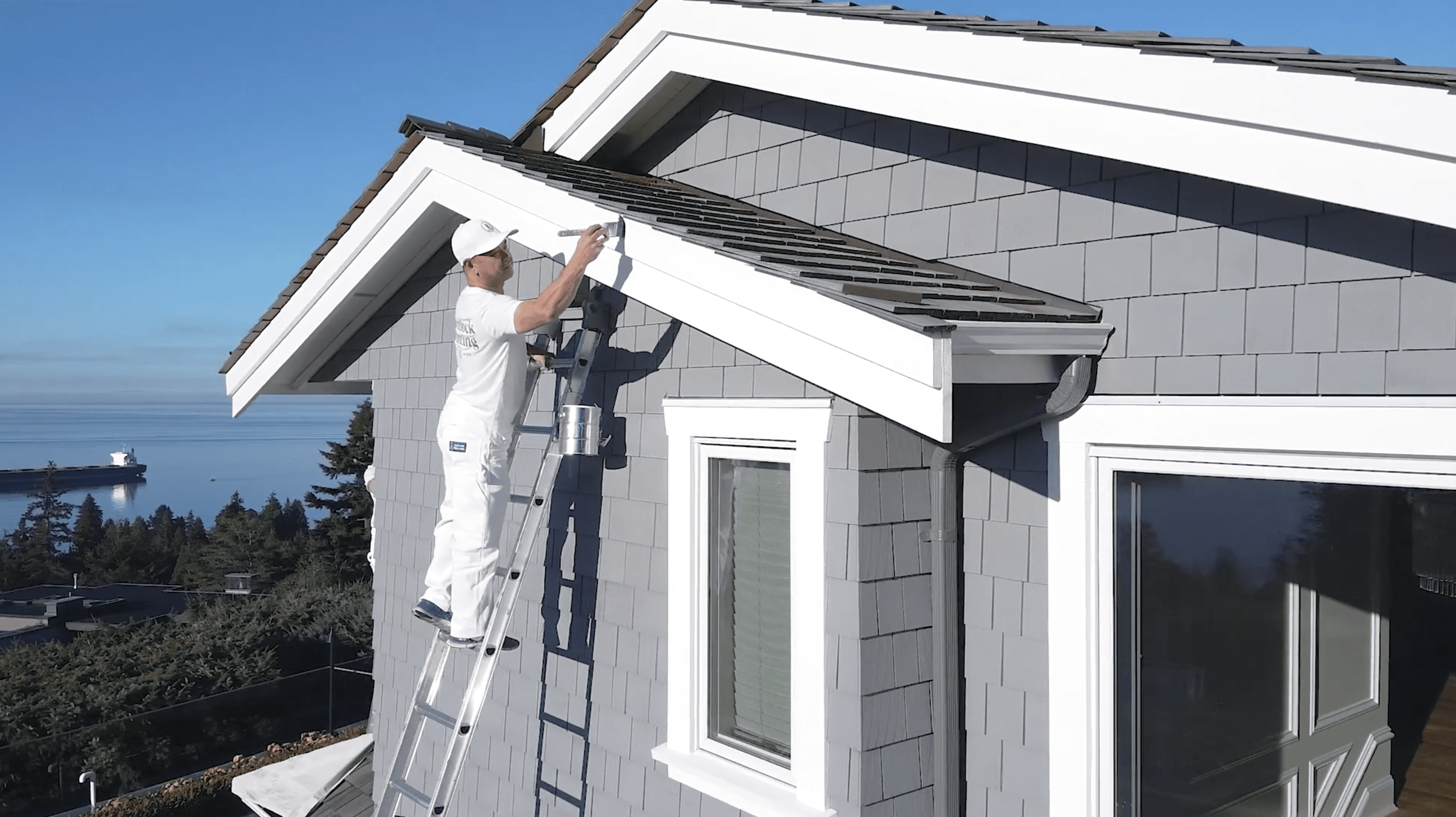
Exterior paint is chemistry. It needs a dry substrate, an appropriate temperature range, and enough time to cure before heavy rain. In Vancouver, weather affects both production pace (how many working hours you get) and risk management (how much buffer you need).
What weather changes in real life
- Wash and dry time: shaded elevations can stay damp longer, especially behind trees and on north-facing walls.
- Cure risk: rushing final coats into a wet stretch increases the risk of poor adhesion and early failure.
- Scheduling: if a crew is moved mid-job due to weather, remobilization and protection steps can add time.
If you want the best mix of conditions and availability, book early and aim for a window where the crew can move steadily without rushing. A calm schedule usually produces better prep and cleaner cut lines than a compressed “must finish before rain” timeline.
How long does exterior painting take?
Many exteriors fall into the 3 to 7 working day range once the job starts, but that can shift based on prep, repairs, and rain buffers. A large, high-detail home or a home requiring staging can take longer. Washing and drying can also add lead time before the first coat goes on.
8) How to lower exterior painting cost without sacrificing durability
It is possible to reduce cost responsibly, but the rule is simple: cut decisions that reduce complexity, not decisions that reduce prep quality. Prep is where durability lives.
Smart ways to reduce cost (without shortening the paint life)
Limit colour count
Body + trim is typically the best value. Every additional colour adds cutting and masking time.
Phase lower-priority areas
Paint the main envelope first. Add fences, sheds, or railings later if budget is tight.
Choose repaint-friendly colours
High-contrast flips and ultra-deep colours can require additional coats for uniform coverage.
Risky ways to reduce cost (usually not worth it)
- Skipping scraping and sanding where paint is lifting.
- Skipping primer on bare substrate after repairs or heavy prep.
- Ignoring failing caulk lines where water can enter behind the coating.
- Rushing final coats into a wet forecast window to “finish fast”.
Homeowner prep that helps the crew move faster
You should not be asked to do contractor work. But a few simple homeowner actions can reduce friction and help crews keep a clean pace:
- Clear a path along the perimeter: move planters, grills, toys, and patio furniture away from the walls.
- Trim vegetation back from siding where possible, especially if it touches the house.
- Identify any known issues early: soft trim corners, past leaks, and areas with repeat peeling.
- Confirm colour decisions ahead of start day to avoid mid-job delays.
9) DIY vs professional exterior painting in Vancouver: when DIY gets expensive
DIY can make sense for smaller, single-storey areas with safe access and stable existing paint. It becomes expensive when access, repairs, and weather buffers are underestimated.
DIY is often reasonable when
- You are painting a small area (for example, a single elevation) with minimal peeling.
- Access is safe and straightforward (no steep grades, no tall ladder work).
- You can respect dry times and weather windows without rushing.
Hiring a pro is often the better value when
- The home is tall, the grade is steep, or access is tight.
- You see widespread peeling, bare wood, cracking caulk lines, or repeated failure areas.
- You need consistent, crisp cut lines on detailed trim.
- You want a warranty-backed result and a predictable scope.
10) Questions to ask any exterior painter in Vancouver
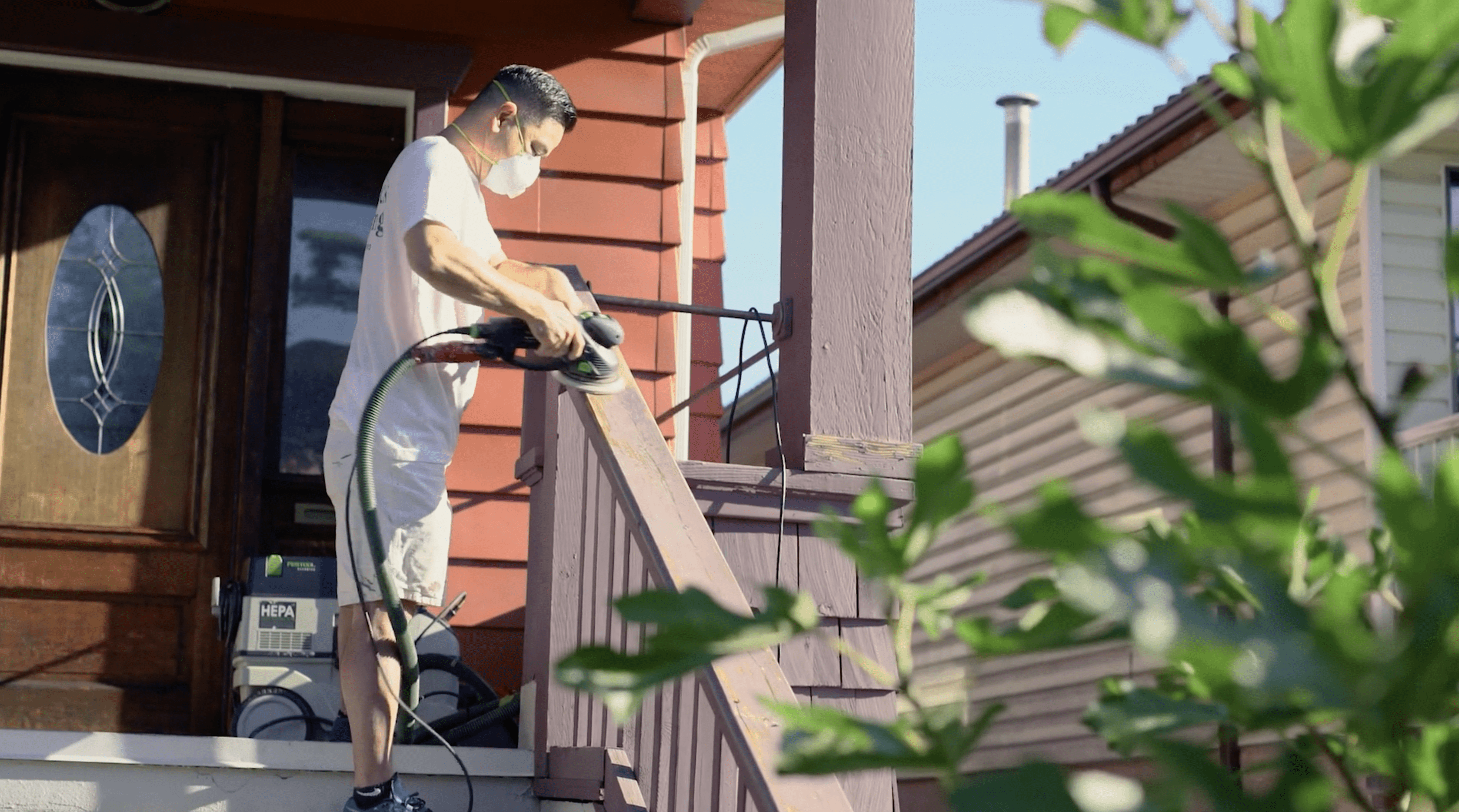
If you only ask one thing, ask about prep. Then ask the follow-ups that force a clear scope. These questions help you compare contractors beyond price.
- What is your prep plan, step by step? Ask them to mention scraping, sanding, caulking, patching, and priming.
- Where will you prime, and what primer will you use? “Prime as needed” is not specific enough.
- How many coats on siding and on trim? Get a number.
- How will you access the high areas? Ladders only, staging, or lift. Ask what is included.
- How do you handle repairs discovered after washing? Allowance, hourly, or change order.
- Who is doing the work? Employees vs subcontractors, and who supervises the job.
- What is the warranty, and what voids it? Ask for it in writing.
- What protection is included? Landscaping, windows, fixtures, decks, and cleanup.
Choose the quote that is most specific about prep and coats, not the quote that is most confident about being fast. Exterior painting lasts longer when the process is defined and repeatable.
11) FAQs
How much does it cost to paint a house exterior in Vancouver in 2026?
A realistic planning range for many Vancouver homes is $4,000 to $20,000+, with many detached homes often landing around $8,000 to $15,000 depending on prep, repairs, access, trim density, and coat count. The best way to pin this down is a site visit that documents prep steps and access needs.
What is a normal exterior painting cost per square foot in Vancouver?
Many homeowners hear ranges around $1.50 to $6.00 per square foot. Use this only as a starting point, because it does not automatically account for scraping, priming, staging, or high-detail trim. If you compare two quotes, compare scope first, then price.
Why are two quotes so far apart for the same house?
The gap is usually scope. One quote may include thorough prep, primer where needed, a realistic number of coats, and an access plan. A lower quote may assume minimal scraping or fewer coats, or it may exclude repairs and change them later. Ask both painters to list prep steps, primer locations, coat count, and repair handling in writing.
Does exterior paint really need primer?
If bare wood or exposed substrate is present, primer is typically necessary for adhesion and longevity. Primer is also commonly used on repair areas, sand-through zones, and surfaces with staining risk. The correct priming plan depends on your substrate and the condition discovered during prep.
When is the best time to paint exteriors in Vancouver?
Late spring through early fall is generally best because you have longer dry windows for washing, drying, and curing. The right time still depends on shade, morning dew, and how long your elevations take to dry after washing. A good contractor will schedule around weather buffers rather than rushing coats.
Related reading
If you are planning an exterior repaint, these guides help you choose timing, colours, and expectations for durability in the Lower Mainland.
Get an exterior painting estimate that matches the real scope
If you want pricing clarity, the difference is scope: defined prep, primer locations, coat count, access plan, and how repairs are handled. Tell us what you are painting and what you have noticed (peeling, bare wood, soft trim), and we will guide you to the right plan.
Minimum charges can apply to cover mobilization, protection, and setup. Your exact price depends on condition, access, and scope.