The honest answer is not “skim coating is cheaper” or “removal is better.” The right choice depends on asbestos risk, how well the texture is bonded, whether it has been painted, how smooth you want the final ceiling to look, and how much disruption your home can handle.
Fast answer
Skim coating usually makes sense when the popcorn is firmly attached, already painted, hard to scrape, or when you want to avoid the mess of full texture removal. Full removal usually makes sense when the texture is loose, unpainted, water damaged, uneven, or when you need the substrate exposed for repairs, pot lights, or a true reset. If asbestos is possible, testing comes first because sanding, scraping, drilling, smoothing, and removing suspect ceiling texture can release fibres into the air.1,2,3

Not sure whether your ceiling should be skim coated or removed?
Hemlock Painting can assess the ceiling, explain the finish options, and help you plan the safest path to a smooth, modern result in Vancouver and the Lower Mainland.
Skim coat vs full removal: what you are actually paying for
Most homeowners compare the two options as if they are interchangeable. They are not. Popcorn ceiling removal is a demolition and refinishing project. Skim coating is a resurfacing project. Both can produce a smooth ceiling, but they get there differently.
| Option | What happens | Best fit | Main cost pressure |
|---|---|---|---|
| Skim coat over texture | The ceiling is assessed, protected, stabilized or primed as needed, then coated with drywall compound until the surface can be sanded, primed, and painted smooth. | Firmly bonded texture, painted popcorn, occupied homes, condos where dust and debris control matter, ceilings where scraping may damage the drywall paper. | Number of coats, drying time, sanding, bonding primer, finish level, and how much texture must be buried. |
| Full removal | The texture is removed if it is safe to disturb, the ceiling is repaired, skimmed where needed, sanded, primed, and painted. | Loose or unpainted texture, damaged ceilings, renovation work, pot lights, water stains, areas where you want the ceiling substrate visible before finishing. | Asbestos testing or abatement, protection, labour to scrape, disposal, repairs discovered underneath, and final smooth finishing. |
The biggest surprise is that full removal does not always eliminate skim coating. Once texture comes off, seams, gouges, torn drywall paper, uneven compound, and old repair patches often need a skim coat before the ceiling is paint-ready.
The first cost driver is safety, not square footage
For Vancouver homes, the safest planning rule is simple: if the ceiling texture may be older, do not scrape, sand, drill, or sample it casually. Health Canada notes that asbestos was used in many building materials before 1990 and that renovation activities such as sanding, scraping, removing, drilling, and disturbing older materials can release fibres.1 WorkSafeBC says asbestos was widely used in B.C. buildings until the early 1990s and that you cannot tell whether a material contains asbestos by looking at it.2 BCCDC also flags textured ceiling coatings and drywall compounds as materials where asbestos may be present, with higher likelihood in older buildings.3
Do not guess
If the ceiling tests positive, the project cost changes because asbestos abatement is not normal painting prep. Since January 1, 2024, asbestos abatement contractors in B.C. must be licensed, and workers performing asbestos abatement work must be certified.4 Vancouver also has specific asbestos disposal rules, including that asbestos waste is accepted at the Vancouver Landfill, not the Transfer Station.5,6
That is why a responsible quote should state the asbestos assumption clearly. If the quote says “remove popcorn ceiling” but does not say whether testing is required, who arranges it, what happens if results are positive, and whether disposal is included, you are not comparing complete scopes.
The practical decision: when skim coating wins and when removal wins
Skim coating tends to win when
- The texture is painted. Painted popcorn can resist water and become slow to scrape. Skim coating may avoid hours of destructive scraping.
- The texture is bonded well. A firm ceiling can be a workable base after proper assessment, cleaning, spot scraping, and bonding prep.
- You want a smooth look with less demolition. Skim coating can keep debris down, especially in furnished condos, bedrooms, and occupied homes.
- The ceiling has minor unevenness but not major failure. Multiple thin coats can flatten the surface without exposing every old seam.
- Dust control is a priority. Skim coating still requires sanding, but the mess is more predictable than removing texture across an entire ceiling.
Full removal tends to win when
- The texture is loose, flaking, or water damaged. Weak material is a poor base for a premium finish.
- The popcorn is unpainted and asbestos-free. Unpainted texture often releases more predictably when wetted and scraped.
- You need ceiling repairs. Water stains, cracks, sagging seams, torn tape, and pot light work often require seeing and correcting the substrate.
- Texture height is heavy. Very deep texture can need too much compound to bury cleanly.
- You want the cleanest long-term reset. Removing failed texture lets the crew rebuild the finish from the drywall outward.
Cost driver 1: asbestos testing, abatement, and disposal
Asbestos is the cost driver that can move a ceiling from a painting project into a regulated hazardous-material project. The risk is not that asbestos exists quietly in an intact ceiling. The risk is disturbance. Health Canada says asbestos-containing materials that are left undisturbed and sealed may not create significant health risks, but fibres can be released during renovation activities such as sanding, scraping, drilling, removing, and disturbing.1
For a homeowner, that means three quote scenarios:
- Test negative: the project can usually proceed as a normal ceiling refinishing project.
- Test positive and leave intact: options may include not disturbing it, covering it, or planning work with qualified professionals. Do not skim, sand, or scrape without proper assessment.
- Test positive and removal is desired: licensed abatement, containment, specialized disposal, and clearance requirements can become separate line items before painting begins.4,5
For more local detail, Hemlock’s guide to asbestos testing before touching a textured ceiling is a useful companion before you price either method.
Cost driver 2: how well the popcorn is attached
Adhesion determines whether the ceiling can support a skim coat and whether removal will be straightforward. A ceiling can look fine from the floor but still have loose edges around vents, light fixtures, old leaks, or previous repairs. A careful painter looks for bubbling, flaking, chalky paint, water staining, texture that releases when touched, and cracks running through the field.
| Condition | Effect on skim coating | Effect on full removal |
|---|---|---|
| Firm, painted texture | Often a good candidate if properly cleaned, sealed, and bonded. | May be slow to scrape because paint can lock the texture together. |
| Firm, unpainted texture | Can work, but primer and moisture control matter. | Often easier to wet and scrape if asbestos-free. |
| Loose or powdery texture | Poor candidate unless unstable areas are removed or stabilized first. | Usually better to remove, then repair and refinish. |
| Water damaged texture | Needs diagnosis before coating. Stain blocking alone is not enough if the substrate failed. | Often needs removal or opening of affected areas to repair the source and substrate. |
Cost driver 3: painted vs unpainted popcorn
Painted popcorn is one of the main reasons skim coating can beat full removal on cost and disruption. Once texture has been sealed under paint, water may not penetrate evenly. That can make scraping slower, patchier, and more likely to tear drywall paper. In those cases, the crew may spend less time creating damage by scraping and more time creating a new flat plane with compound.
Unpainted popcorn is different. If it is asbestos-free and sound, it may soften and release more predictably. That can make full removal more competitive, especially in empty rooms with simple access. The quote should not assume this. A test patch, visual inspection, and safety status should drive the method.
Cost driver 4: the finish standard you expect
“Smooth ceiling” can mean different things. A rental refresh, a standard repaint, and a high-end smooth ceiling under big windows are not the same finish. The Gypsum Association’s finish-level system is the industry language behind this. A Level 5 finish includes a skim coat over the surface and is used where lighting and paint conditions may highlight imperfections.7
Where premium smoothing matters most
Large windows, skylights, long hallways, low-angle light, glossy or darker paint, and open-plan rooms expose ceiling waves. If those conditions apply, the cost driver is not just removing texture. It is achieving a consistent, paint-ready surface after the texture is gone or buried.
This is also why a lower quote can disappoint. A crew may remove the bumps but leave enough joint shadowing, waviness, or sanding scratches that the ceiling still looks rough after paint. If you care about the final look under natural light, specify the finish level and the number of skim coats included.
Cost driver 5: sanding, dust control, and cleanup
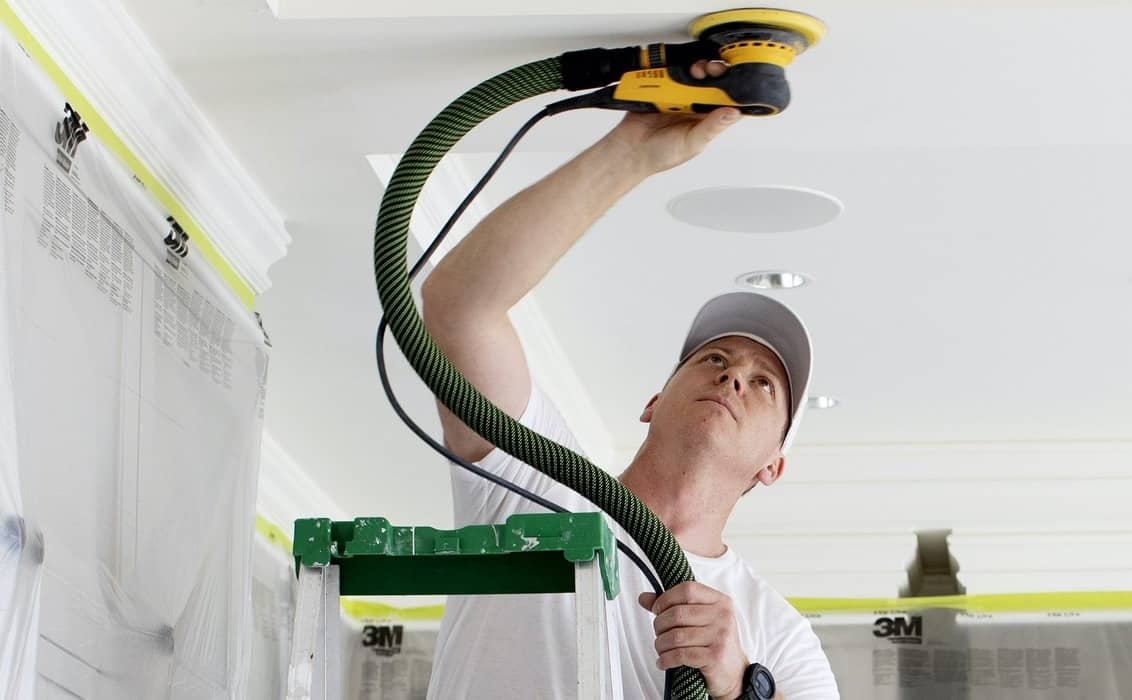
Whether you skim coat or fully remove, dust control matters. Drywall sanding can create high dust exposures, and NIOSH found that vacuum sanding systems reduced drywall sanding dust exposures by 80% to 97% in tested systems.8 Better dust control can cost more up front because it involves equipment, setup, masking, and cleanup, but it protects the home and improves the work environment.

For occupied homes, this line item is not fluff. Ask how the crew will protect floors, walls, cabinets, vents, lighting, furniture, and adjacent rooms. A low estimate that excludes masking, vent protection, daily cleanup, or HEPA-style dust control can become expensive in other ways.
Cost driver 6: room size, ceiling height, and access
Square footage matters, but it is only the starting point. A 400-square-foot open living room is often easier to manage than four small rooms with closets, hallways, ceiling fans, built-ins, and furniture. High ceilings, stairwells, vaulted areas, tight bathrooms, and kitchens with cabinets or islands slow the work because protection and access take longer.
North American cost guides commonly price popcorn removal by square foot, with published ranges around $1 to $3 per square foot for removal in some estimates and higher ranges when refinishing, painting, or asbestos is involved.9,10 Skim coating is also commonly priced by surface area, but costs move with coats, ceiling height, repairs, and finish expectations.11 Vancouver pricing can differ because labour, parking, strata logistics, disposal rules, and project complexity vary by home.
Useful pricing mindset: use published per-square-foot ranges only as a rough context. Your actual quote should be built from the ceiling’s condition, asbestos status, access, protection requirements, repair scope, finish level, and paint system.
Cost driver 7: what is hiding under the texture
Popcorn texture hides a lot. It can disguise wavy drywall, old patches, nail pops, joint ridges, cracks, water stains, and uneven board transitions. Full removal can reveal those problems. Skim coating can hide some of them, but only if the underlying texture and substrate are stable.
Common hidden items that change the price include:
- Old water damage that needs stain blocking or drywall repair.
- Loose tape seams that need cutting out and retaping.
- Cracks from movement, settling, or previous patching.
- Ceiling fixtures that need removal, masking, or finish feathering.
- Pot light, speaker, or electrical cutouts that require patching.
- Crown moulding edges where skim coat thickness must be controlled carefully.
If you are already planning broader interior painting, the ceiling work should be sequenced first. Smooth ceilings create dust before they create beauty. Walls, trim, and touch-ups should come after the major ceiling prep is finished.
Cost driver 8: condo, strata, and occupied-home logistics
In Vancouver condos and townhomes, the ceiling is not the only constraint. Elevators, parking, loading zones, building quiet hours, strata rules, waste removal, hallway protection, neighbour sensitivity, and ventilation all affect the quote. A whole-condo ceiling project can require more planning than a detached house with driveway access, even if the square footage is smaller.
Skim coating may be more attractive in occupied condos because it avoids hauling large amounts of scraped texture through common areas. Full removal may still be the right answer if the texture is failing or repairs are needed, but the logistics should be priced honestly.
Cost driver 9: paint system, primer, and final ceiling paint
The final paint is not just decorative. Primer helps seal new compound and create even porosity. Ceiling paint helps hide lap marks and reduce glare when applied properly. If stains are present, the system may need stain-blocking primer before the finish coat. If fresh compound is not primed correctly, the ceiling can flash, meaning some areas absorb paint differently and show uneven sheen.
This is why a ceiling quote should state whether it includes primer, number of paint coats, product quality, leftover paint labelling, and cleanup. Hemlock’s process for popcorn ceiling work includes smoothing, priming, painting, and HEPA-filtered cleanup as part of the service approach described on the popcorn ceiling removal service page.
A smoother ceiling starts with the right scope.
Before you compare prices, compare the method, safety assumptions, finish level, protection, cleanup, and warranty. Hemlock can walk through those details with you before work begins.
Which option is cheaper?
The cheaper option is the one that gets you the finish you actually want without creating hidden repair, safety, or cleanup costs. In simple rooms with asbestos-free, unpainted texture, full removal may be more efficient. In rooms with painted, stubborn, well-bonded popcorn, skim coating may be more efficient because it avoids destructive scraping. In high-end spaces, both options may converge because the final smooth finish still needs multiple coats, sanding, primer, and paint.
| Scenario | Likely better value | Why |
|---|---|---|
| Painted popcorn in a furnished condo | Skim coat | Less scraping, less debris, easier containment if the ceiling is stable and asbestos-free or properly assessed. |
| Unpainted, asbestos-free popcorn in an empty room | Full removal | Texture may scrape efficiently, then the ceiling can be repaired and finished. |
| Loose or peeling texture | Full removal or repair-first approach | Skim coating over weak material risks future failure. |
| Older ceiling with uncertain asbestos status | Testing first | No price comparison is meaningful until the ceiling is confirmed safe to disturb. |
| Luxury smooth finish under strong natural light | Method depends on substrate, but finish level drives cost | The quote must include enough skim, sanding, priming, and paint work to reach the visual standard. |
How to compare quotes without getting burned
Ceiling quotes can look similar on the first line and be completely different underneath. Use the questions below before choosing a contractor. They pair well with Hemlock’s guides on choosing a painter in Vancouver, scope, prep, and warranty details, and apples-to-apples quote comparison.
- What is the asbestos assumption? Ask whether testing is required, who arranges it, what happens if the result is positive, and whether abatement is excluded.
- Are you skim coating, removing, or combining both? Many “removal” jobs still need skim coating after scraping.
- How many coats are included? Ask about bonding primer, skim coats, primer, and finish paint coats.
- What finish level is included? A ceiling that looks smooth under a bedroom light may not look smooth under raking light in a living room.
- How will dust be controlled? Ask about masking, vent protection, sanding equipment, containment, and cleanup.
- What repairs are included? Nail pops, seams, cracks, water stains, fixture patches, and drywall damage should not be vague.
- What is excluded? Furniture moving, electrical fixture removal, asbestos abatement, disposal, ceiling fan removal, and crown moulding work should be clear.
- What warranty applies? Understand what is covered if peeling, cracking, flashing, or texture failure appears later.
A homeowner-friendly decision path
Use this before you commit
- Step 1: Confirm the home age and whether the texture might contain asbestos. When in doubt, test before disturbance.
- Step 2: Check whether the popcorn is painted, loose, stained, or water damaged.
- Step 3: Decide what “smooth” means for your room, especially if there is strong side light.
- Step 4: Ask whether the ceiling will need repair after removal or extra coats after skim coating.
- Step 5: Compare complete scopes, not just the total number at the bottom.
What Hemlock looks for during an estimate
A good ceiling estimate is part technical inspection and part expectation setting. Hemlock’s team will typically be looking at surface stability, texture depth, signs of moisture, access, protection requirements, light conditions, repair needs, whether testing is required, and how the finished ceiling should look in daily use. That is the difference between “make the bumps go away” and “make the room feel clean, modern, and finished.”
If your ceiling is intact and you simply want to refresh it instead of smoothing it, Hemlock’s guide to painting a popcorn ceiling without creating a mess may be the more practical route. If you want a modern smooth finish, use this article to decide which project scope deserves a closer look.
Common mistakes that increase the final cost
- Skipping asbestos testing because the room is small. Small areas can still create airborne fibre risk if disturbed.
- Choosing the lowest quote without asking about finish level. A cheap smooth ceiling that flashes under light is not a finished result.
- Assuming removal means no skim coat. Scraping often reveals damage that still needs compound work.
- Skim coating over unstable texture. New compound is only as reliable as the material underneath it.
- Ignoring fixtures and edges. Fans, pot lights, crown moulding, vents, and cabinets create slow detail work.
- Painting too soon. Joint compound needs adequate drying before sanding, priming, and painting.
- Not protecting adjacent rooms. Ceiling projects create overhead dust, which travels if containment is weak.
FAQ
Is skim coating over popcorn ceiling safe?
It can be safe only after the ceiling has been assessed and any asbestos concern has been handled properly. If the texture may contain asbestos, do not sand, scrape, or disturb it casually. Testing and professional guidance come first.1,2,4
Does skim coating remove asbestos?
No. Skim coating covers a surface; it does not remove the original material. If asbestos-containing texture is present, covering, encapsulating, repairing, or removing it must be evaluated carefully by qualified professionals. The safest choice depends on condition, disturbance risk, and the renovation plan.1,3,4
Is full removal always better than skim coating?
No. Full removal is better when texture is failing, unpainted and scrapeable, or when repairs require exposing the drywall. Skim coating can be better when the texture is firmly bonded and removal would create unnecessary damage or mess.
How long does a popcorn ceiling smoothing project take?
Most projects take multiple visits because compound, primer, and paint need drying time. Larger rooms, higher ceilings, repairs, multiple skim coats, stain blocking, and difficult access add time.
Can I stay in the home during the work?
Often, yes, for non-asbestos ceiling refinishing, but the room being worked on should be treated as a contained work zone. Ask about masking, dust control, ventilation, access, daily cleanup, and whether pets or children should be kept away.
What is the best finish for a modern smooth ceiling?
For rooms with strong natural light or a premium look, ask about a Level 5-style smooth finish. It requires more surface work than a basic repaint but helps reduce visible texture differences and imperfections under demanding light.7
Ready to price the right ceiling solution?
Tell us whether you are considering skim coat, full removal, or you are not sure yet. We will help you compare the options and understand the scope before the work starts.
The bottom line
If you remember one thing, make it this: the project is not priced by texture alone. It is priced by risk, prep, access, repairs, finish quality, dust control, and the method that best suits the existing ceiling. Skim coating can be the smarter route over stable, painted popcorn. Full removal can be the smarter route when the ceiling needs a reset. Asbestos risk overrides both and should be handled before anyone touches the texture.
For a Vancouver homeowner, the best quote is the one that explains the method clearly, protects your home carefully, and defines the finished result before the first drop sheet goes down.
References
- Health Canada, “Asbestos and your health.”
- WorkSafeBC, “Asbestos.”
- BC Centre for Disease Control, “Asbestos.”
- WorkSafeBC, “Learn about licences.”
- City of Vancouver, “Asbestos disposal policy.”
- City of Vancouver, “Dispose of residential asbestos waste and used drywall from your home.”
- Gypsum Association, GA-214, “Recommended Levels of Finish for Gypsum Board, Glass Mat and Fiber-Reinforced Gypsum Panels.”
- NIOSH, “Control of Drywall Sanding Dust Exposures.”
- Forbes Home, “How Much Does Popcorn Ceiling Removal Cost?”
- HomeGuide, “How Much Does Popcorn Ceiling Removal Cost?”
- HomeGuide, “How Much Does It Cost to Skim Coat Walls and Ceilings?”