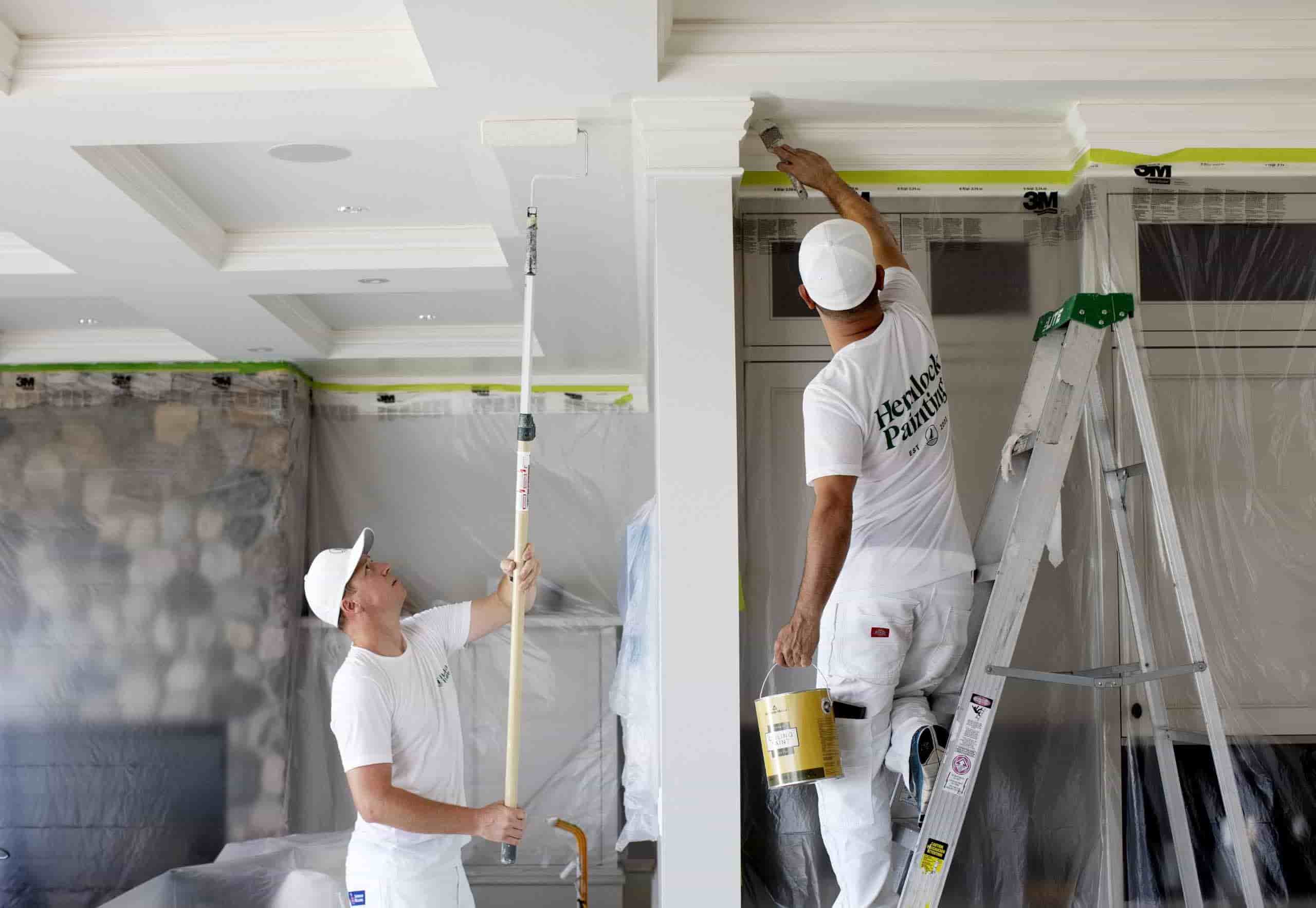
The best tool for painting a popcorn ceiling is usually a high-quality 3/4-inch to 1-inch roller cover on a sturdy extension pole. A sprayer can be faster in an empty, well-masked room, but it creates more overspray, more prep, and more cleanup. Before either option, confirm the ceiling is stable, dry, and asbestos-safe.
Fast answer
Best overall for most homeowners: a 9-inch or 12-inch synthetic knit, microfiber/polyamide, or lambswool-style roller cover with a 3/4-inch nap for light to medium popcorn and a 1-inch nap for deeper texture. Rough surfaces need a higher nap so the fibres can reach into the texture valleys, and both Wooster and Purdy recommend thicker naps for rough or textured surfaces.7, 8
Best sprayer for large, empty rooms: an airless or high-efficiency airless sprayer that can handle latex ceiling paint, fitted with a latex-rated tip such as a 515 or similar 0.015-inch to 0.019-inch orifice range. Graco lists latex paint in the 0.015-inch to 0.019-inch tip range, and Wagner’s HEA units include a 515 tip for latex paints.9, 10
Best decision if the ceiling is old, damaged, stained, crumbling, or untested: pause before painting. In B.C., WorkSafeBC says homes should be tested for asbestos before renovation, demolition, or maintenance work that could disturb asbestos, and Health Canada says asbestos may be released during sanding, scraping, removing, drilling, or other disturbance.1, 2
Painting a popcorn ceiling can brighten a room quickly, especially if the texture is intact and you are not ready for full removal. But it is also one of the easiest ceiling jobs to underestimate. The texture is fragile, thirsty, uneven, and often older than the room’s last renovation. Use the wrong roller, and you can leave bald spots. Use too much pressure, and the texture can pull away. Use a sprayer without enough masking, and overspray can land on floors, windows, trim, cabinets, and fixtures.
The goal is not simply to buy the most powerful tool. The goal is to use the tool that coats the texture with the fewest passes, the least pressure, and the least risk.
Should you paint a popcorn ceiling at all?
Paint is a reasonable short-term option when the ceiling is clean, dry, intact, and confirmed safe to work around. It is a poor option when the texture is loose, water-damaged, sagging, stained from an active leak, or likely to be removed soon.
The biggest safety issue is asbestos. WorkSafeBC says asbestos was used in more than 3,000 building materials from the 1950s to the 1990s, including textured ceiling coat, and that homeowners, stratas, and property managers need testing before renovation or maintenance work that could disturb asbestos.1 Health Canada also notes that asbestos was mainly used in homes before 1990 and can be found in older building materials including ceiling tiles and surface treatments.2
Safety check before you buy any tool
If the home was built before 1990, or if the popcorn texture may have been applied before 1990, do not sand, scrape, drill, repair aggressively, or disturb the ceiling until it has been properly assessed. The EPA says you generally cannot tell whether a material contains asbestos by looking at it, and that sampling should be done by trained professionals because incorrect sampling can be more hazardous than leaving the material alone.3
There is also a long-term renovation issue. Once a popcorn ceiling has been painted, water has a harder time softening the texture for future scraping. Bob Vila notes that painted popcorn ceilings often need a stripping product because water will not saturate the texture beneath the paint film.12 In plain English: painting can make a future removal messier and more labour-intensive.
Best tool by situation
| Ceiling situation | Best tool | Recommended spec | Why it works | Avoid |
|---|---|---|---|---|
| Stable, lightly textured popcorn in a furnished room | Manual roller | 9-inch roller, 3/4-inch nap, synthetic knit or microfiber/polyamide cover | Good control, less masking than spraying, enough nap to reach the texture valleys | Foam rollers, 1/4-inch or 3/8-inch wall rollers, heavy pressure |
| Stable, heavy popcorn texture | Manual roller | 3/4-inch to 1-inch nap; consider 1-inch for deeper, rougher texture | Higher nap holds more paint and reaches deeper texture without scrubbing the ceiling | Short naps that only coat the high points |
| Large empty room, full containment possible | Airless sprayer | Latex-rated sprayer tip, often 515 or 517 depending on paint and sprayer rating | Fast, even coverage on irregular texture when the room is fully masked | Spraying in occupied rooms without full masking, weak ventilation, poor respirator fit |
| DIY user worried about overspray | High-efficiency airless sprayer or roller | HEA sprayer with adjustable pressure, or 3/4-inch roller if the room is not empty | HEA units are designed for more controlled spray patterns, while rollers reduce airborne overspray | High pressure settings, fast trigger work, skipping masking |
| Unknown age, pre-1990 home, damaged texture, or ceiling you may remove later | Assessment first | Asbestos testing, moisture check, and removal or skim-coat plan | Disturbing suspect materials can release fibres; painting may make future removal harder | Sanding, scraping, dry brushing aggressively, or painting over active damage |
Key takeaway: if the room is furnished, roll it. If the room is empty and you can mask everything, spraying can be efficient. If the ceiling is old or questionable, assess it before doing either.
Best roller for popcorn ceiling paint
For most homeowners, the best roller is not a specialty gadget. It is a high-quality roller cover with enough nap to reach the valleys of the texture without forcing you to press hard.
Best nap
3/4 inch for light to medium popcorn. 1 inch for deeper, rougher texture. Wooster says rough surfaces often require a 3/4-inch to 1 1/2-inch nap so fibres can reach the valleys of the texture.7
Best material
Synthetic knit, microfiber/polyester, polyamide, or lambswool-style covers. Purdy notes that knit fabrics hold more paint and cover larger areas faster, while woven fabrics reduce lint and can create a smoother finish.8
Best width
9 inches is easiest for most DIY painters. 12 inches can be faster if you are comfortable overhead. Larger 14-inch to 18-inch covers are productive but heavier and harder to control.
A thick-nap roller matters because popcorn texture is all peaks and valleys. A short nap may only coat the high points, leaving a shadowy, patchy ceiling. A thicker nap carries more paint into the recesses. The tradeoff is splatter. That is why you want a quality cover, a slow rolling pace, and a properly loaded roller, not a cheap sleeve overloaded with paint.
Best roller setup
- Roller cover: 3/4-inch synthetic knit, microfiber/polyamide, or lambswool-style cover for most popcorn ceilings.
- Heavier texture: 1-inch nap if the 3/4-inch cover is missing the valleys.
- Frame: sturdy 9-inch frame with a smooth rolling cage, not a wobbly bargain frame.
- Extension pole: adjustable pole that lets you stand naturally without overreaching.
- Paint: flat ceiling paint or dead-flat interior paint. Glossy paint highlights texture and flaws.
- Primer: stain-blocking primer for water marks, smoke stains, or uneven absorption, but only after the source of staining is resolved.
Roller covers to avoid
Avoid foam rollers. They are usually designed for smoother surfaces and can skip over popcorn texture. Avoid short wall rollers unless the texture is extremely shallow. Avoid old roller covers that shed lint. Avoid cardboard-core covers for overhead work because they can soften, deform, or separate during a long ceiling session.
If you want a broader tool primer before shopping, Hemlock’s guide on choosing the right painting tools and its practical paint roller tips are useful next reads.
Best sprayer for popcorn ceiling paint
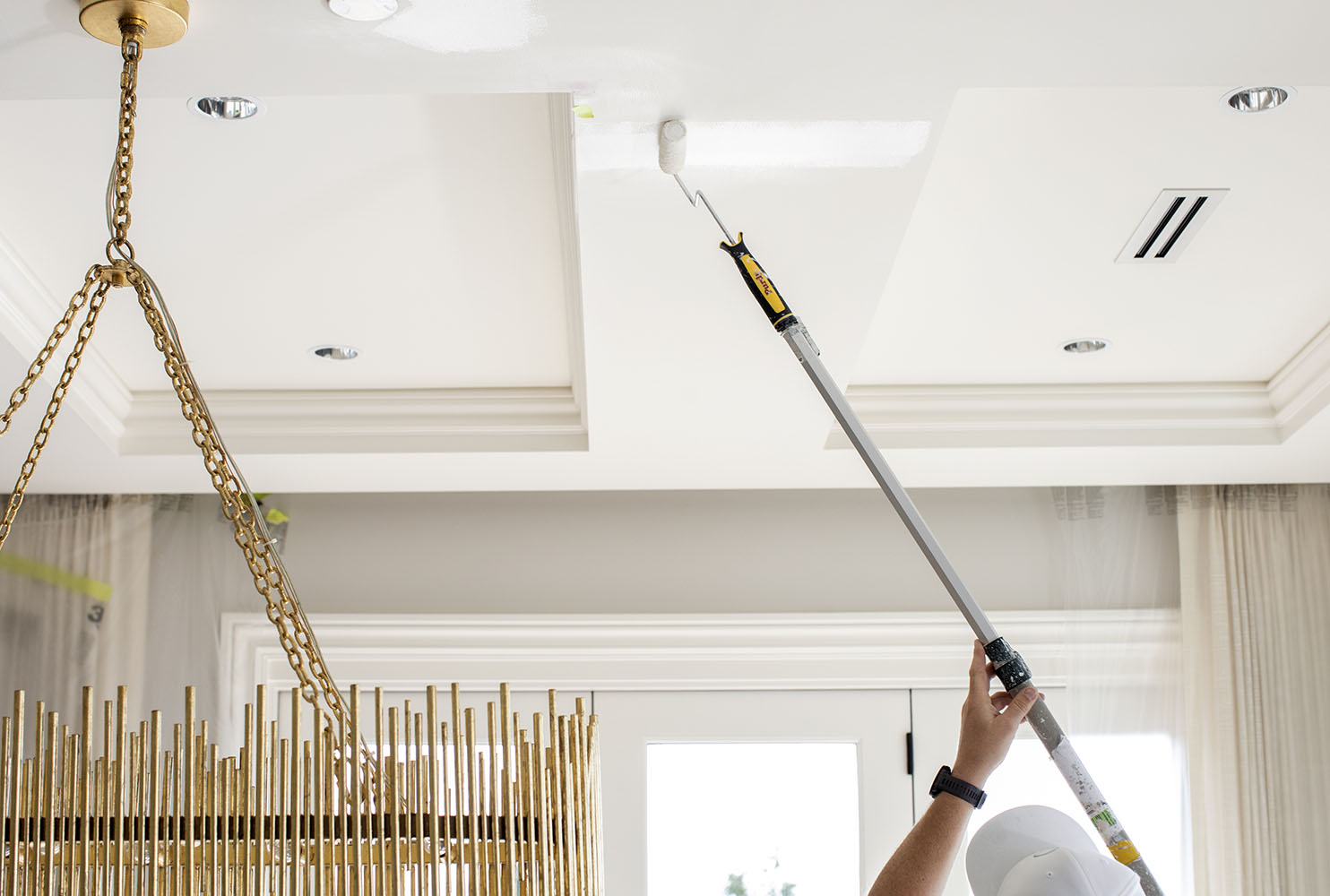
The best sprayer for a popcorn ceiling is a controlled airless setup that can spray latex ceiling paint without excessive thinning. It needs adjustable pressure, the right tip, enough hose to move safely, and a room that can be fully masked.
For latex paint, Graco’s spray-tip guide lists a 0.015-inch to 0.019-inch range, and explains that the spray tip controls both the amount of material leaving the gun and the width of the fan.9 In practical terms, many ceiling-paint setups start around a 515 tip, which means about a 10-inch fan pattern at the recommended distance and a 0.015-inch orifice. Always confirm the paint manufacturer’s data sheet and your sprayer’s maximum tip rating before spraying.
Sprayer verdict
Use a sprayer when the room is empty, the floor and walls are fully protected, the ceiling is stable, and you are comfortable managing overspray. Do not use a sprayer as a shortcut in a furnished room. The masking you skip becomes cleanup later.
Airless vs HEA vs HVLP for popcorn ceilings
| Sprayer type | Best use | Pros | Cons | Popcorn ceiling verdict |
|---|---|---|---|---|
| Airless sprayer | Large ceilings, empty rooms, professional prep | Fast, strong coverage, good for latex paint with the right tip | Overspray, more masking, more cleanup, steeper learning curve | Best sprayer option when containment is excellent |
| High-efficiency airless | Large DIY jobs where overspray control matters | Wagner says HEA technology reduces overspray by up to 55 percent and provides a controlled spray pattern.10 | Still requires masking, practice, and cleanup | Good homeowner-friendly sprayer category if the room is prepared |
| HVLP handheld or cup sprayer | Small details, trim, furniture, small patches | Lower output, often less intimidating | Small cup, slower for ceilings, may struggle with thicker ceiling paint | Usually not the best choice for a full popcorn ceiling |
| Aerosol texture or patch can | Small texture repairs only | Convenient for patches | Hard to blend perfectly, not for painting a whole ceiling | Use only for small repairs after safety checks |
Sprayers also change the safety picture. Paints and coatings can release VOCs, and the EPA recommends increasing ventilation when using products that emit VOCs and following label precautions.5 If you use a respirator, NIOSH notes that effectiveness depends heavily on proper fit and use, including following the manufacturer’s donning instructions and performing a seal check for tight-fitting respirators.6
For more sprayer-specific technique, Hemlock’s paint sprayer best practices article is the closest internal resource to pair with this guide.
Roller vs sprayer: which gives the better finish?
On a popcorn ceiling, “better finish” usually means even coverage without knocking down texture, creating lap marks, or making a mess. Both tools can work, but they reward different conditions.
| Factor | Thick-nap roller | Airless or HEA sprayer |
|---|---|---|
| Best for | Furnished rooms, smaller ceilings, DIY control | Empty rooms, large ceilings, full masking |
| Texture safety | Good if you use light pressure and avoid repeated passes | Good because there is no roller pressure, but airflow and paint load can still disturb weak texture |
| Mess level | Moderate splatter, easier to contain | High overspray risk without complete masking |
| Learning curve | Lower | Higher |
| Speed | Slower application, faster setup | Fast application, slower setup and cleanup |
| Best finish habit | Load evenly, roll slowly, work in small sections, avoid scrubbing | Practice first, keep distance consistent, overlap passes, keep pressure as low as practical |
| Homeowner recommendation | Best overall | Best only when the room is ready for professional-level containment |
What paint should you use on popcorn ceilings?
Use a flat ceiling paint or dead-flat interior paint. Flat paint hides irregularity better than satin, eggshell, semi-gloss, or gloss. Popcorn texture already creates visual shadows, so sheen usually makes the ceiling look busier.
Most popcorn ceilings also absorb more paint than a smooth ceiling because the texture increases surface area. Plan for more paint than you would use on flat drywall. If the ceiling has old water stains, smoke staining, or uneven yellowing, spot-prime first with a stain-blocking primer. Do not simply paint over a stain if the leak or moisture problem is still active.
Use less water, not more force
Popcorn texture can soften when it gets wet. Thinning paint too much can increase the chance of saturating the texture, while heavy roller pressure can pull loose material away from the ceiling. The better approach is to use the correct nap, load the roller properly, and apply paint gently.
If you are deciding between painting and full resurfacing, compare this guide with Hemlock’s mess-reduction guide for painting popcorn ceilings, the Vancouver asbestos testing guide, and the popcorn ceiling removal cost guide.
How to prep a popcorn ceiling before painting
Prep matters more than the roller or sprayer. A good tool cannot rescue a dirty, damp, loose, or unsafe ceiling.
Confirm the ceiling is safe to disturb
If the ceiling may contain asbestos, do not dry-brush, sand, scrape, drill, or repair it until it has been assessed. The EPA warns against sanding, scraping, drilling, sweeping, or vacuuming debris that may contain asbestos.4 In B.C., confirm testing and contractor requirements before work begins.
Check for texture failure
Look for sagging, flaking, bubbling, water staining, or texture that falls when touched lightly. If it is loose, painting can pull it down. If it is stained, solve the cause before coating.
Protect the room
Remove as much furniture as possible. Cover floors, walls, fixtures, windows, cabinets, and vents. Popcorn ceiling paint splatter travels farther than wall paint because the roller or sprayer is overhead.
Clean gently
Use a soft duster or vacuum with a gentle brush only if the ceiling is confirmed safe and stable. Avoid aggressive brushing. Do not wash the ceiling heavily, because water can loosen texture.
Prime only where needed
Prime stains and porous patches. If the whole ceiling is unevenly absorbent, a full primer coat may help, but avoid soaking the texture. Use the lightest effective application method.

How to paint a popcorn ceiling with a roller
Rolling is the most user-friendly method for many homeowners. It gives you control and avoids the full-room overspray management required by a sprayer.
1. Load the roller evenly
Dip the roller, then roll it on the tray ramp until the cover is evenly loaded but not dripping. A thick nap should look full, not flooded. If paint is dripping before the roller reaches the ceiling, it is overloaded.
2. Start in a test area
Choose a less visible corner. Make one light pass. If texture releases, stop. If the paint skips over the valleys, move up in nap thickness or apply a slightly fuller load. Do not solve missed spots by pressing harder.
3. Work in small sections
Work in roughly 3-foot by 3-foot or 4-foot by 4-foot areas. Keep a wet edge, but avoid re-rolling the same spot repeatedly. Popcorn texture does not like scrubbing.
4. Roll in one main direction
On smooth ceilings, painters often cross-roll for coverage. On popcorn ceilings, too many passes can soften or detach texture. Roll gently in one main direction, feathering edges. If a second coat is needed, wait for full dry time and apply the next coat perpendicular only if the texture is stable.
5. Cut in carefully
Use a brush or small thick-nap mini roller around edges, corners, ceiling medallions, and fixtures. Do not jam a full-size roller into wall-ceiling corners, because it creates heavy buildup and splatter.
6. Let it dry fully before judging coverage
Wet ceiling paint can look uneven. Wait until it dries before deciding whether it needs a second coat. If the ceiling is old and very porous, a second light coat often looks better than one heavy coat.
How to paint a popcorn ceiling with a sprayer
Spraying can produce even coverage quickly, but only when the setup is right. Think of it as a prep project with a short painting phase, not a quick shortcut.
1. Mask like overspray is guaranteed
Cover walls, windows, floors, lights, doorways, vents, built-ins, and anything that will remain in the room. Tape plastic securely. Turn off HVAC to avoid moving paint mist through the home, then ventilate safely with controlled airflow to the exterior when the coating label allows.
2. Choose the right tip
Use the paint manufacturer’s data sheet and the sprayer manual. For many latex ceiling paints, a 0.015-inch to 0.019-inch tip range is typical according to Graco’s general guide.9 A 515 tip is common because it gives a broad fan without too large an orifice, but thicker paints, different brands, or older sprayers may require adjustment.
3. Use the lowest effective pressure
High pressure increases overspray. Start low, test on cardboard or masked plastic, and increase only until the fan pattern is even without tails. Keep the gun perpendicular to the ceiling and maintain a consistent distance.
4. Use overlapping passes
Overlap each pass by about 50 percent. Start moving before pulling the trigger and release before stopping. This avoids heavy spots at the beginning and end of each pass.
5. Watch the texture, not just the colour
If the popcorn starts to sag, darken heavily, or release, stop. A sprayer can apply a lot of paint quickly. More paint is not better if the texture is fragile.
Common mistakes that ruin popcorn ceiling paint
Using a short nap roller
A short nap can skim the high points and leave the valleys unpainted. The result is patchy coverage and repeated passes that stress the texture.
Pressing too hard
Pressure crushes texture, lifts loose popcorn, and creates heavy splatter. Let the nap do the work.
Skipping asbestos testing
Older ceiling texture can contain asbestos. WorkSafeBC and Health Canada both advise testing or professional help before work that could disturb suspect materials.1, 2
Spraying without full masking
A sprayer can be fast, but overspray can turn a ceiling job into a whole-room cleanup. Mask first, spray second.
Painting active stains
Water stains need diagnosis. If the leak is still active, paint and primer only hide the problem temporarily.
Choosing sheen
Satin, eggshell, and semi-gloss can highlight every bump. Flat ceiling paint is more forgiving.
Many of these problems are really surface-prep problems. If you are trying to prevent peeling, patchiness, lap marks, or failure, Hemlock’s guide to common surface preparation mistakes is a relevant companion piece.
When removal or skim coating is better than painting
Painting is not always the best upgrade. It can freshen the ceiling, but it does not modernize the surface, remove the texture, or solve hidden defects. In many Vancouver homes and condos, the better path is to test first, then choose between removal, skim coating, or a painted refresh.
Consider popcorn ceiling removal or skim coating instead of painting when:
- You want a modern smooth ceiling rather than a brighter textured ceiling.
- The popcorn is stained, sagging, loose, crumbling, or uneven.
- You plan to sell and want the ceiling to feel updated.
- The ceiling has already been painted multiple times and looks heavy.
- You may remove the texture soon, because new paint can make future scraping harder.12
- The home is older and needs asbestos testing before any disturbance.
Hemlock’s popcorn ceiling process includes testing for asbestos before work begins when appropriate, preparing the area, removing or skim coating depending on the job, sanding to a level 5 finish, then priming and painting the smooth ceiling. That route is more involved than painting the existing texture, but it creates a cleaner long-term result.
Hiring help: what to ask before anyone touches the ceiling
If the ceiling is old, high, damaged, or likely to contain asbestos, hire carefully. The cheapest quote is not always the least expensive outcome, especially if a contractor paints over an active moisture issue, skips containment, or disturbs suspect material.
- Ask how they handle asbestos risk. Do they require testing before disturbance in older homes?
- Ask whether they recommend painting, removal, skim coating, or covering. A good contractor should explain the tradeoffs, not push one option for every ceiling.
- Ask what room protection is included. Floors, walls, doors, vents, fixtures, and cleanup should be clear.
- Ask how many coats are included. Popcorn ceilings can absorb more paint than expected.
- Ask what happens if the texture releases during painting. This should be discussed before work begins.
- Ask about warranty and final inspection. The standard should be visible, written, and realistic.
For a more general hiring framework, read Hemlock’s questions and red flags for choosing a Vancouver painter, painting contract essentials, and what cheap painting can risk.
FAQs
What is the best roller nap for popcorn ceilings?
Is it better to roll or spray a popcorn ceiling?
Rolling is usually better for furnished homes because it creates less airborne overspray and requires less masking. Spraying is better for large, empty rooms where you can fully protect walls, windows, floors, fixtures, and vents.
Can I use a paint sprayer on a popcorn ceiling?
Yes, if the ceiling is stable, safe to work around, and the room can be fully masked. Use a sprayer that can handle latex paint, match the tip to the paint and sprayer rating, and ventilate according to the product label. EPA guidance recommends increasing ventilation when using products that emit VOCs.5
What spray tip should I use for popcorn ceiling paint?
Many latex ceiling-paint applications start with a 515 or 517 style tip, but the right answer depends on the paint data sheet and your sprayer’s tip rating. Graco lists latex paint in the 0.015-inch to 0.019-inch tip-size range.9
Should I prime a popcorn ceiling before painting?
Prime stains, smoke marks, water marks, and uneven patches. If the whole ceiling is porous or discoloured, a full primer coat can help. But do not soak fragile texture, and do not paint over an active leak.
Can painting a popcorn ceiling make removal harder later?
Yes. Paint can seal the texture, making water less able to soften it for scraping. Bob Vila notes that painted popcorn ceilings often require a stripping product because water will not saturate the texture beneath the paint.12
Do I need asbestos testing before painting a popcorn ceiling?
If the ceiling is older, damaged, or may be disturbed during prep or repair, testing is the safer route. WorkSafeBC says B.C. homeowners, stratas, and property managers need testing before renovation, demolition, or maintenance work that could disturb asbestos, and the EPA says you cannot reliably identify asbestos by sight alone.1, 3
Bottom line
If you must paint a popcorn ceiling, start with a 3/4-inch thick-nap roller and flat ceiling paint. Move up to a 1-inch nap if the texture is deep. Choose a sprayer only when the room is empty, fully masked, well ventilated, and the ceiling is confirmed stable and safe. If the ceiling is older, damaged, or something you may want smooth later, do not start with a tool purchase. Start with an assessment.
References
- WorkSafeBC: A home renovation shouldn’t actually take your breath away
- Health Canada: Asbestos and your health
- U.S. EPA: Protect Your Family from Exposures to Asbestos
- U.S. EPA: Asbestos do’s and don’ts for homeowners
- U.S. EPA: Volatile Organic Compounds’ Impact on Indoor Air Quality
- CDC NIOSH: Respirator Selection and Use
- Wooster Brush: How To Match the Roller Cover to the Surface
- Purdy: How to Choose a Paint Roller Cover
- Graco: Choosing and Understanding Airless Spray Tips
- Wagner SprayTech: Control Pro 150 Sprayer
- U.S. EPA: Remodeling and asbestos-containing building materials
- Bob Vila: Popcorn Ceilings – All You Need to Know